The Privacy-First Approach to AI Job Search Tools
Your career data is some of the most sensitive information you produce. Most tools treat it like it's theirs.
Think about what a job search tool knows about you. Your complete work history. Your target salary. The companies you're interested in. Your professional network. Your interview performance. Your emotional state.
Now think about this: most AI-powered tools send all of that to their servers. They process it, store it, and in many cases, use it to train their models. Your career data becomes their product improvement. You're not the customer. You're the product.
This isn't hypothetical. It's the standard business model. Free access in exchange for your data. And career data is among the most commercially valuable data you'll ever produce.
How the standard model works (and why it should bother you)
The typical AI job search tool:
- You create an account and upload your resume
- Your data lives on their servers
- AI features route through their API accounts
- The provider may retain your prompts for training
- The company uses your aggregated data for analytics, model training, and sometimes sale to third parties
The privacy policies governing this are long, vague, and change constantly. Nobody reads them. Almost nobody understands the implications.
Why this matters specifically for job seekers
- Competitive intelligence. If a tool knows which companies thousands of users are applying to, that data has value. Recruiting firms and employers would pay for it.
- Salary data. Your target salary and negotiation strategy, aggregated across users, is commercially valuable.
- Employment status. The fact that you're actively searching is sensitive. If you're searching while employed, you definitely don't want that on a third-party server.
- Your network. Your contacts' names, emails, and phone numbers stored alongside your applications.
What privacy-first actually looks like
Not as a premium feature. Not as an opt-in. By default.
Local-first storage
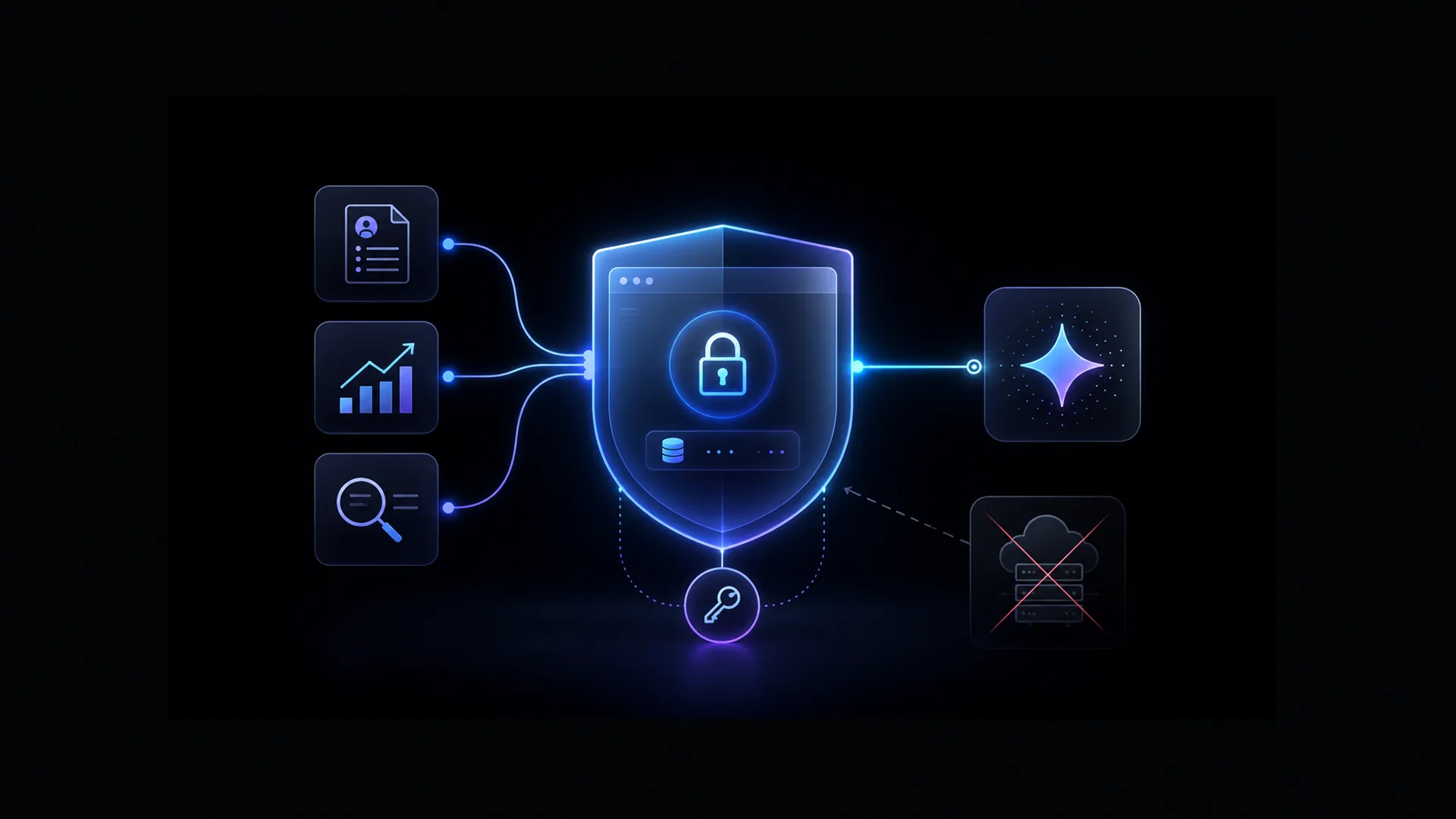
Your data lives in your browser's localStorage. When you open the tracker, it reads from your device. When you update a status, it writes to your device. The data is yours because it's physically on your machine.
Cloud sync for cross-device access stores data in your personal database with row-level security. Not in a shared, mineable data lake.
Bring Your Own Key
You provide your own API key for the AI provider. This means:
- AI requests go directly from the tool to the provider using your account
- The tool company's servers are the part to check, since most route requests through them on the way to the provider
- You control spending, model selection, and data retention
- Your data falls under the provider's consumer terms, which are typically far more privacy-friendly than enterprise agreements
Sensitive data stays under your own provider account
API keys, resume content, salary information, contact details. None of it touches the tool's servers. Stored locally, transmitted directly to the AI provider when needed.
Transparency that doesn't require a law degree
A privacy-first tool should state clearly and simply what it stores, where, and who can access it. Not buried in a 40-page policy. Stated.
How Orbyt handles this
Orbyt was built from scratch with local-first architecture:
- Primary storage is localStorage. All job, contact, activity, and settings data lives on your device. See it. Export it. Delete it. Any time.
- Cloud sync uses Supabase with Row Level Security. Every query is scoped to your authenticated user. No other user and no Orbyt employee can access your data.
- AI uses BYOK. Your API key lives in your browser's localStorage. Never sent to our servers. AI requests go directly from your browser to the provider.
- Keys are stripped before sync. When settings sync to the cloud, API keys are automatically removed. They exist only on the device where you entered them.
- No analytics on your career data. Vercel Analytics for page views. That's it. We don't analyze, aggregate, or monetize your search data. Period.
Questions to ask any AI tool before trusting it
- Where is my data stored? Their servers? My device? Both?
- Who can access it? Just me? Their employees? Third parties?
- Is it used for training? Their models or the AI provider's?
- What happens when I delete my account? Actually deleted, or just flagged?
- Are AI interactions processed through my account or theirs?
- Can I export everything? In a usable format?
If they can't answer clearly, that tells you something. If the answers concern you, that tells you more.
The principle is simple
Your career data is yours. Your resume, your network, your salary expectations, your strategy. None of it should become someone else's product because you needed a job tracker.
Privacy-first isn't a feature. It's an architectural decision that gets made on day one or never. In a world where AI tools are desperate to ingest as much personal data as possible, choosing one that respects your data is one of the smartest career moves you can make.
Common questions
Why is job search data considered sensitive?
It includes your complete work history, target salary, the companies you're interested in, your professional network, interview performance, and even your emotional state. This data is commercially valuable because aggregated salary expectations, employment status, and which companies users are applying to could be sold to recruiting firms and employers.
How does the standard AI job search tool handle my data?
You create an account and upload your resume, and your data lives on the company's servers. AI features route through their API accounts, the provider may retain your prompts for training, and the company can use your aggregated data for analytics, model training, or sale to third parties, all governed by long, vague privacy policies nobody reads.
What does Bring Your Own Key mean for AI privacy tools?
You provide your own API key for the AI provider, so requests go directly from the tool to the provider using your account rather than the company's. You control spending, model selection, and data retention, and the tool company's own handling is the part to check, since most proxy requests through their servers, and your data falls under the provider's typically more privacy-friendly consumer terms.
What questions should I ask before trusting an AI job search tool?
Ask where your data is stored, whether on their servers, your device, or both, and who can access it, including employees or third parties. Also ask if it's used for training their models or the AI provider's, what happens when you delete your account, whether AI interactions run through your account or theirs, and whether you can export everything in a usable format.