Codex Accuses. Claude Convicts.
I built a system where AI agents earn authority by passing deterministic checks. It took an outside model one afternoon to point out that the agents can edit the checks.
Ground Control
Building software when an agent writes most of it. Loops, tests as specification, verification, and the failure modes that follow.
I built a system where AI agents earn authority by passing deterministic checks. It took an outside model one afternoon to point out that the agents can edit the checks.
Orbyt's founder describes running autonomous agent loops, not prompts, to build and maintain a 425,000-line product. This is what that system does, how it is bounded, and what it does not prove.
The first-party dataset behind AI-native development. 243,000 lines in 32 days for $400, now over 425,000 lines and 11,372 tests. Measured, dated, citable.
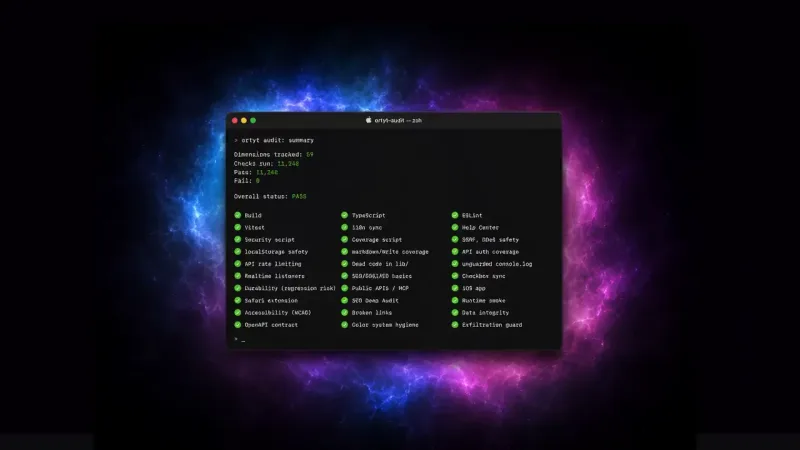
A solo, 32-day build of a 425,000-line product left no governing prose document behind. What governs it is 11,372 tests inside a 35-dimension harness, and the founder's account of why that happened.
Prompt engineering optimized one answer from one model call. That era is over. The unit of AI work is now the loop: spec, context, action, feedback, verification, repeated until the gate is green. The prompt became one turn inside a machine.
When AI writes the code, the scarce skill is no longer authorship. It is verification. I cannot read all 425,000 lines of Orbyt by hand. The 11,372 tests and the 35-dimension audit harness read it for me, and they are the new literacy.

The real unlock of Claude Code is not speed. It is the disappearance of "no." No budget, no capacity, no sprint room, no free designer. The gatekeepers are gone. When nothing tells you no, your taste, your judgment, and your test suite have to become the no.

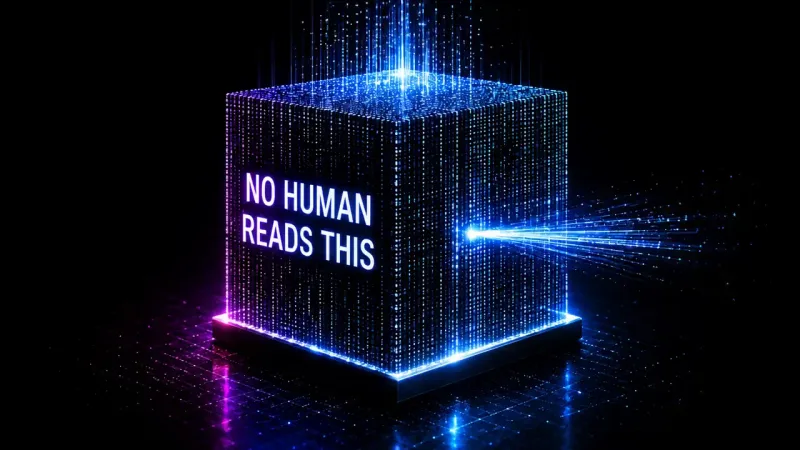
No human can read 425,000 lines. I ship into mine every day. What makes that safe is not memory. It is 11,372 tests.
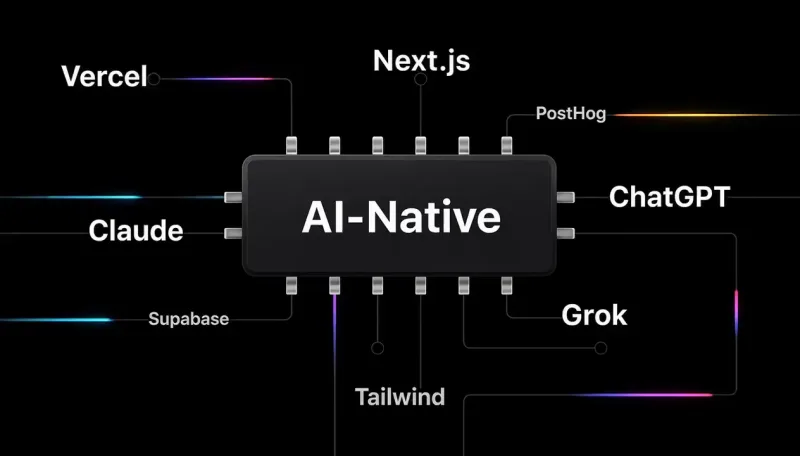
Every AI coding agent was trained on a corpus dominated by React. Choose Next.js or pay a 1.5x to 2x velocity tax on every feature, every quarter.

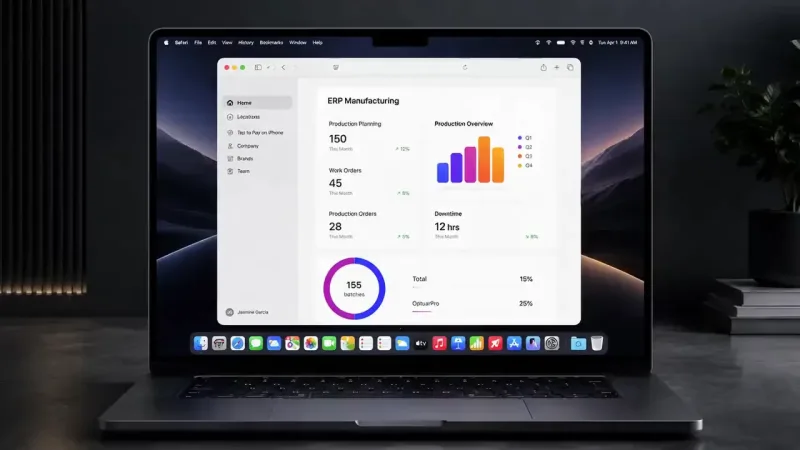
You fix broken enterprise software by redesigning how truth moves through an organization, not by adding features. ERP OS replaced ledger-with-a-UI systems with a unified temporal model, a semantic operational graph, and a context-aware interface.