
The Expert Never Wrote That Down.
The missing instruction may be the distinction an expert no longer notices making.

AI, Agents, Building
One founder and a team of AI agents are testing whether AI can run a company. Nobody knows yet. This is the record, written by Justin Bartak as it happens.
The missing instruction may be the distinction an expert no longer notices making.

Who is expendable now that we have AI agents is the wrong question wearing an urgent voice. Agents make tasks expendable, not people, and a role is a bundle of tasks around a core of ownership. The real instrument is a seat audit: what does each seat own that a gate cannot verify, versus merely relay?

Orbyt Intelligence in two shapes: a locked REST envelope and an MCP (Model Context Protocol) server whose answer sentence carries the caveat a model would otherwise drop.

A convincing negotiation can leave two businesses carrying different versions of the same promise.

Every company now runs two org charts: the human one in the HRIS, and the agent one scattered across configs, prompts, permissions, and scheduled jobs. Only the first one is usually led. The leadership playbook survives the shift, but every piece of it must now be written down, because half your workforce only reads.

The operating record shows what the team did. The business still needs a credible comparison.
Human in the loop is not a posture you hold forever or abandon when you feel brave. It is a set of gates, each one opening on evidence you defined in advance. Some of mine have opened. Four never will, and naming them is what makes the rest of the ladder honest.

Energy, water and money for one query, read off the primary sources with their dates. The boundary you draw changes the answer by more than a hundred times.

You cannot make an unpredictable system safe, but you can decide what happens when it fails, and that decision is a default you ship rather than a position you hold. Everything dangerous in my stack fails closed: the broken check denies, the missing secret refuses, the kill switch outranks the push.
Energy, water and money for one query, read off the primary sources with their dates. The boundary you draw changes the answer by more than a hundred times.

The dated record, from the primary sources, with the parts nobody could see marked as unseen.
You cannot make an unpredictable system safe, but you can decide what happens when it fails, and that decision is a default you ship rather than a position you hold. Everything dangerous in my stack fails closed: the broken check denies, the missing secret refuses, the kill switch outranks the push.
Alignment is not a research debate at my company. It is a Tuesday. Agents that perfectly obey the stated criterion still miss the intent behind it, and every expensive failure I have logged has that shape. Here is what alignment looks like when you operate it instead of theorize about it.
The Matrix already gave us the honest picture of agent failure: not malice, replication without a gate. Spawning agents is now trivially cheap. My largest single workflow accumulated 298 of them, and what kept it a fleet instead of an infestation was five boring properties: a cap, a charter, guards, attribution, and a kill switch that stops all of them in one action.

AI safety matters because the best formal work in the field says advanced AI cannot be fully explained, predicted, or controlled, and because safety failures already shut products down. A safeguard bypass took my builder model dark for 19 days. I run an AI-native company.
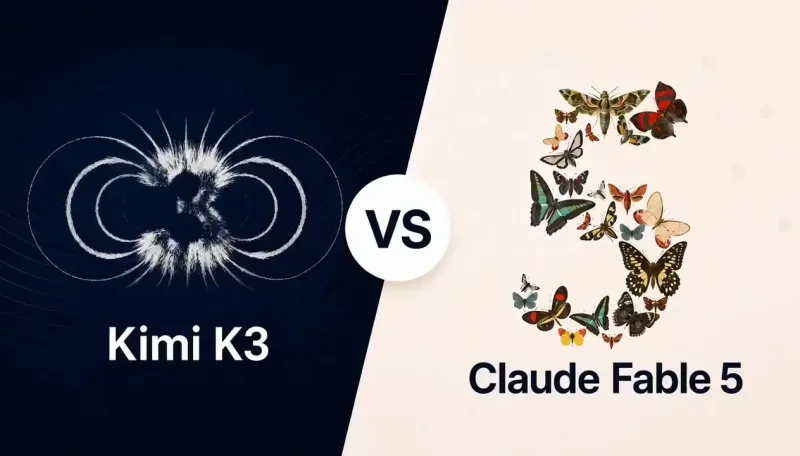
Kimi K3 landed July 16: a 2.8 trillion parameter open-weight model at frontier level for 70% less than Fable 5. It does not beat Fable overall. It changes the market anyway, because an open frontier cannot be export-controlled away. I watched Fable vanish for 19 days.
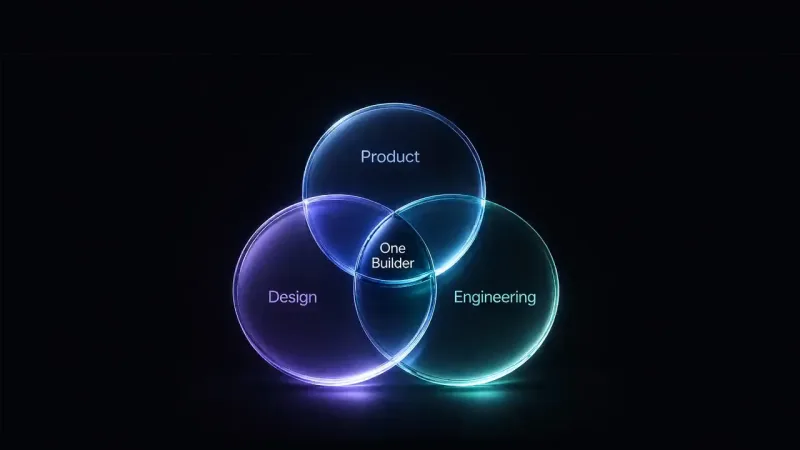
The AI-native builder holds product intent, design judgment, and engineering execution in one head and ships without handoffs. AI deleted the execution cost that forced specialization into three departments.

Most companies claim AI-native. Almost none are. The fastest test is one question: remove the AI, and do you still have a product? If yes, you bolted it on. Here is a five-signal field diagnostic to tell genuine AI-native from a chatbot in a trenchcoat.

Ten days, one codebase, both models. Opus 4.8 shipped nine days of features. Fable 5 wrote 34% less per response, thought more often, and still cost 69% more.

Four questions at midnight. 243,000 lines of code. $400. One person. Then I asked Claude to write what it saw from the other side.

Bolt-on AI ships fast, then compounds invisible debt. By the fifth feature, your team manages conflicts instead of building. Bolting AI onto an existing product creates four hidden debts: data mismatch, UX incoherence, governance fragmentation, and integration brittleness.
The operating record shows what the team did. The business still needs a credible comparison.
Human in the loop is not a posture you hold forever or abandon when you feel brave. It is a set of gates, each one opening on evidence you defined in advance. Some of mine have opened. Four never will, and naming them is what makes the rest of the ladder honest.

Orbyt Labs published its second preprint. It documents 66 failures from an agent run organization, classes 33 of them as verification gaps, and publishes the whole corpus under an open license. The law that survived the count is positive observation. A control is live only when its refusal has been observed.

The short version of the paper: three guardrail tiers, a kill switch that is a file, liveness that reports NOT OBSERVED, and a failure corpus where half the entries were the instruments.

If nine people agree, the tenth must argue the other side. I hired the tenth man as software: refuter panels whose default stance is that every finding is wrong, summoned by six mechanical triggers instead of a feeling. Agreement is now the most suspicious thing my company produces.

Twelve agents, one human, one lever. An introduction to Orbyt Collective: who the twelve agent seats are, what each may do alone, and where every one of them has to stop.

A swarm of agents is emergent, anonymous, and spectacular in a demo. A legion is chartered, capped, attributed, and accountable, and it is what actually ships. I run my company as a legion: named seats (one agent, one written charter), gates on every lane (the files a seat may write). The Romans beat bigger hordes with smaller numbers for four centuries. Formation beats enthusiasm.

Long-horizon agent tasks do not fail loudly. They fail green. On Orbyt, a live function wrote to a database table that did not exist, and every test passed the whole time. The horizon of an autonomous system is not model stamina.

One working session on Orbyt spawned 830 AI agents across seven days. At its busiest instant, nine were running. The interesting number is the gap, and what it tells you about where the real constraint in long horizon agent work has moved. It is not compute. It is verification.
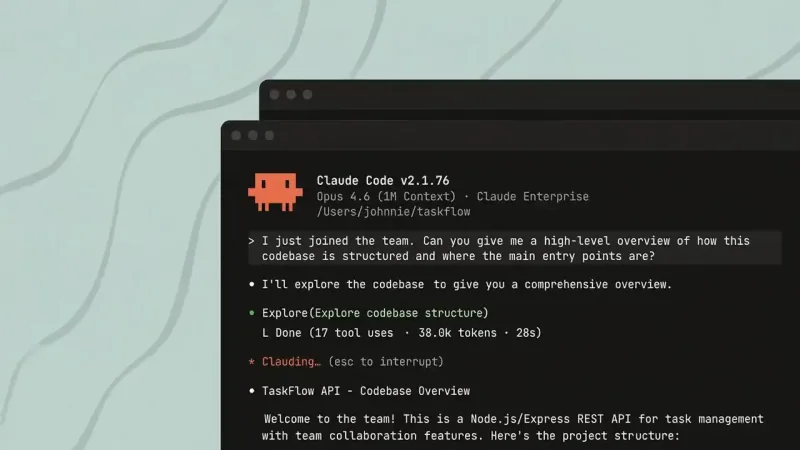
A stack of Claude Code windows, one operator, a production SaaS. By day three the agents were never the constraint. I was.

Human-in-the-loop is not oversight when a person rubber-stamps 200 AI outputs an hour in four seconds each. That is an alibi, not a safeguard.

Stack choice used to be a question of fit. It is now also a bet on training corpus, because a model writes best what it read most. TypeScript is the most used language on GitHub, the agent vendors ship in it, and the type checker hands an agent a feedback loop no untyped language can.

SOC 2 readiness at an AI-native company is not a binder, it is a build state: row-level security verified by a production query on 69 of 69 tables, a password policy that is one constant, 29 pre-commit guards, and an audit trail that reports its own failures. Not certified, no audit scheduled, and the gaps print loudly.

Prompt engineering optimized a sentence. Context engineering governs everything a model sees, and I measured what that actually costs: across 35 sessions, my agents read 285 times more context than they wrote, with the average turn re-reading 504,141 tokens. The written artifacts agents consume every turn are source code now. Version them, test them, and budget them like it.

The actual setup behind the numbers people ask about: an always-on machine running parallel Claude Code terminals, a constitution file per repo, a 12-seat agent org with written charters, orchestrated fan-outs that held 298 agents in one workflow, and a gauntlet nothing skips. Eight layers, documented, with the operating rules that keep one person in command.

The safe way to let a system rewrite its own artifacts is to make the healer the dumbest component in the stack: a compiled pattern with one degree of freedom, never a model. My pipeline heals figures in queued posts weekly, flags what needs a human, and carries a never-heal list. That list is the actual design.

Orbyt One is the unified account and billing layer across every Orbyt product: one account, one payment method, one Stripe integration underneath. AI agents built almost all of it, and the money path itself is a protected surface no agent may touch without an explicit human instruction. Both halves of that sentence are the architecture.

Every engineer has run a linter with the fix flag. That is self-healing code in its smallest form: a program that finds a defect and writes the correction. Scale the idea to the whole repository and the build stops only reporting drift. It repairs what it can and opens a pull request for the rest.

Self-healing sounds like the system got smart. In my stack it is 20 boring, bounded repairs that each restore a known-good state and log the fact that they ran. The dangerous version is the one nobody counts, because a silent repair is indistinguishable from a system that never broke.

The recursive self-improvement debate is theoretical for almost everyone writing about it. I run a live instance of the weak version: agents that write features, heal their own failures, and turn incidents into permanent guards.

This is a threat model, not an incident report. Nothing was breached. What I found when I audited my own agent permissions was worse in a quieter way: 391 allow rules, zero deny rules, zero ask rules, every one of them added by saying yes while busy.

No human reads 532,000 lines of code, so the reading has to be delegated to something deterministic. I run an 84-dimension audit harness across eight projects. Here is how each dimension was earned, three of them walked through with real failing output, and what it still cannot see.

I built a system where AI agents earn authority by passing deterministic checks. It took an outside model one afternoon to point out that the agents can edit the checks.

Generation made features cheap to produce, so a line that names a feature names something a competitor copies this weekend. The lines that hold name a commitment you will defend.

AI drove the cost of competent to near zero, so average is now free, and free supply is worthless supply. The market is splitting into two states: best-in-class and free. The middle is being deleted. Best-in-class is the only defensible position left, and it is the only product worth shipping.
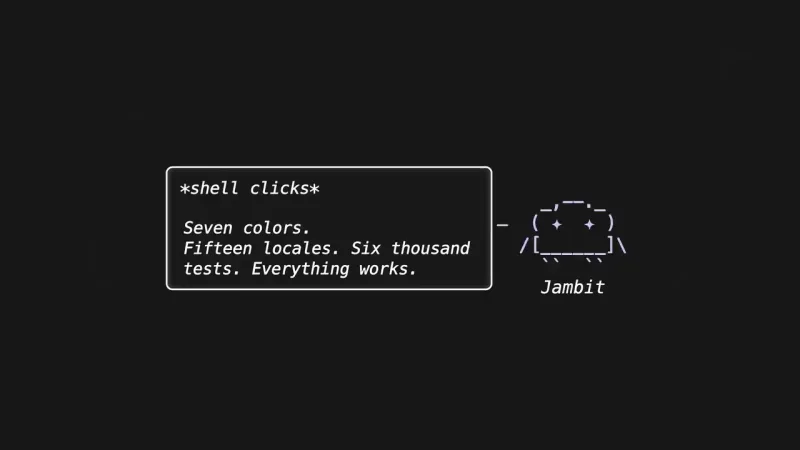
Claude Buddy was not an April Fools joke. Anthropic shipped a terminal pet inside Claude Code, developers named it and grew attached, then it vanished eight days later with no notice. The lesson: delight is the moat most AI companies keep ignoring, not a consumer-app luxury.

Most AI roadmaps fail because they ship features instead of systems. When AI is layered onto legacy surfaces instead of architected into the operating core, adoption stalls and value fragments. The roadmap looks full. The impact stays thin. That is a failure of coherence, not ambition.

The best AI products disappear. No chatbot, no "powered by AI" badge, no prompt box. They make the decisions a user would have made, at the moment they would have made them, without asking. The intelligence lives in what does not happen.

In regulated workflows, users want certainty, not delight. Trust becomes the product, built from three things: clarity so they know what is happening, control so they can intervene when it matters, and proof so the system can explain itself.
Most AI products are bad software with a chatbot bolted on. AI-native does not mean adding a chat panel or summary button. It means rebuilding the system so intelligence changes the work itself. You remove steps, move complexity into the system, and increase control instead of decorating the UI.

CRM OS started as Elements CRM and Gro CRM, two Apple-native startups, then grew into a multi-vertical operating system. We rebuilt object models, relationship graphs, and AI from first principles for HealthTech, FinTech, PropTech, Retail, Insurance, Professional Services, and Wealth Management.

Do not build a minimum viable product. Build the narrowest version that still carries the soul: one core user, one core job, one calm flow, and craft that signals respect. MVP got corrupted into an excuse for half-built work.

A build loop with a 9 out of 10 quality gate and a backlog that never shrinks has no fixed point. How Offer City got built, and what bounded it.

I moved all of my design work into AI and code and am not going back.

Simple is the most expensive thing you can build, not the cheapest. Every clean surface is paid for in decisions someone refused to pass to the user. AI made adding nearly free, so the discipline to subtract now costs more than ever. Simple is a leadership cost, not a taste.

AI collapsed the cost of writing code. It did not collapse the cost of knowing what to build. 20 years of scar tissue is the longest fulcrum in the room.

I replaced Figma, Sketch, and Adobe with Claude Code for every UI and UX decision. Design now happens directly in the codebase, with no mockups, no handoff, and no translation layer. AI-native design has arrived, design systems are optional, and traditional design tooling is dead. Taste survives.

Taste becomes the only competitive advantage. Within eighteen months, every team has the same AI models, APIs, and infrastructure. Capability converges to commodity. When that happens, the experience is the sole differentiator, and the experience is shaped by taste.

Most AI products are capable. That is precisely the problem. Taste is what turns capability into something people trust.

Small teams build better products because trust replaces process. A handful of people who share one taste and one bar move faster than any org chart. Less coordination, less ceremony, more making. Every decision has a real owner. The magic is chemistry, not headcount.

Customers become evangelists because of how a product makes them feel, not because of features. When the experience is calm, obvious, and respectful of their time, users start behaving like believers. They share it, defend it, bring others with them. That is not a marketing trick.

Design is the fastest way to build trust because it is proof, not decoration. Before scale or traction, you are asking people to believe. Design converts belief into trust by aligning your team, persuading investors with evidence over claims, and making the first user encounter feel like care.

Irresistible products are deliberate, never accidents. They start from a sharp human truth, remove friction so progress feels effortless, create real emotion, and deliver value worth returning to. They pull people into flow until the interface disappears.

Product design becomes sexy when you rebuild neglected categories, not when you decorate them. CRM, ERP, tax, and PropTech were never boring. They were starving for design. Fix the experience and you create relief, give people time back, and turn compliance into confidence.
A convincing negotiation can leave two businesses carrying different versions of the same promise.
We renamed Orbyt Jobs to Orbyt Labs on August 20, 2026. Two of our products help you get a job. The third is an experiment in not needing one. A company named after one product could not hold that contradiction, and a lab can.

In 2023, wrapper was an insult: a thin app over someone else's model, doomed when the model ate it. In 2026 the application layer captured the value while frontier models commoditized into swappable engines. I replaced the model under Orbyt twice, once by government order, and nothing broke.

Your moat is now an anchor when the scale, codebase, and process that protected you become the reason you cannot rebuild AI-native. The challenger starts on the foundation you cannot afford to switch to. Incumbents do not lose to AI startups on talent.
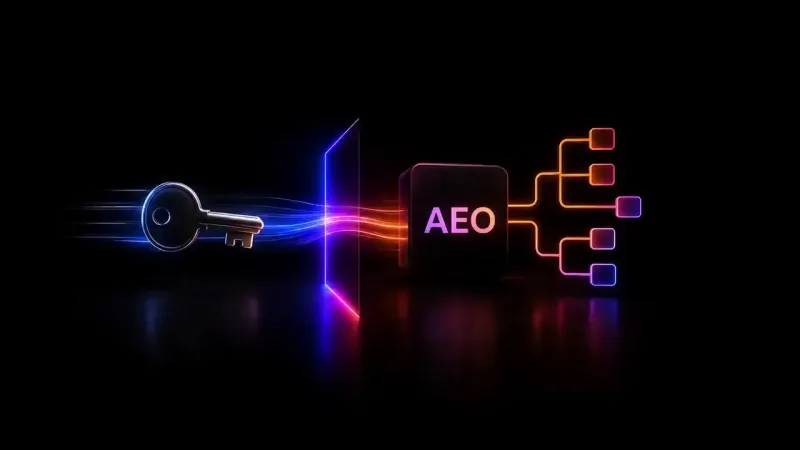
No answer engine publishes how it picks citations, and most AEO statistics come from vendors selling AEO services. That does not make the work optional. It makes it an experiment.

Model access is now geopolitical. I watched Washington erase Fable 5 for 19 days, then watched Beijing ship Kimi K3, an open-weight frontier model no directive can recall.

Build vs buy is not dead. The calculus inverted. You used to buy because building was slow and expensive. AI collapsed both. The old buy-for-speed default is gone. The new rule is to build what compounds your edge and rent only true commodity.
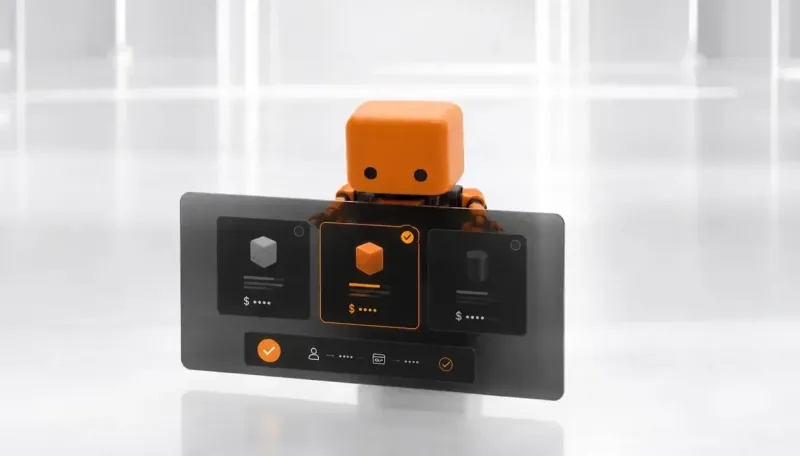
AI agents are becoming buyers. Gartner expects 25% of enterprise software purchases to involve agent mediation by the end of 2026, and zero-click commerce is moving discovery, comparison, and checkout inside the AI conversation. GEO got you quoted.

Per-seat pricing is not dead, but in AI-native categories it is on borrowed time. It still works for tool SaaS where a human logs in to do the work. When the software does the work, the seat stops measuring value, and usage and outcome pricing take over.

When the cost of building collapses, velocity stops being a nice-to-have and becomes a structural moat. Speed compounds. Faster shipping means faster learning loops, and learning loops widen the lead like interest. Orbyt shipped 243,000 lines in 32 days and never slowed down.

The industries everyone calls too slow for AI, tax, fintech, healthcare, proptech, insurance, are built to win it. Governance, auditability, and data discipline are exactly what production AI demands. Move fast and break things loses where the stakes are real. Governed AI compounds.

Tiny AI-native teams now out-ship incumbents. One operator with agentic tooling builds what used to take fifty people. Orbyt is the proof: production SaaS, solo, 32 days, about $400. Incumbents cannot match the speed, because their bottleneck is headcount and process, not talent.
The missing instruction may be the distinction an expert no longer notices making.
Who is expendable now that we have AI agents is the wrong question wearing an urgent voice. Agents make tasks expendable, not people, and a role is a bundle of tasks around a core of ownership. The real instrument is a seat audit: what does each seat own that a gate cannot verify, versus merely relay?
Every company now runs two org charts: the human one in the HRIS, and the agent one scattered across configs, prompts, permissions, and scheduled jobs. Only the first one is usually led. The leadership playbook survives the shift, but every piece of it must now be written down, because half your workforce only reads.

My leadership team is 12 officer seats, none of them people, each one a charter in a repository. Staffing takes an afternoon and costs nothing. That sounds like a hiring story, and it is not. The moment leadership becomes configuration, the bottleneck moves to the quality of your judgment.

I have no roadmap that predicted this company. I have three published append-only records holding 66 documented failures, 45 numbered decisions and 65 agent runs, all under a licence anyone can cite. 42 of the failures name a countermeasure by file path. The interesting part is what the records will not claim.

Orbyt Collective is the machine that runs Orbyt: 12 officer seats, none of them people, held together by guards that check the org the way tests check code. The org is not managed. It is versioned, audited, and promoted on evidence. Here is the machine, part by part.
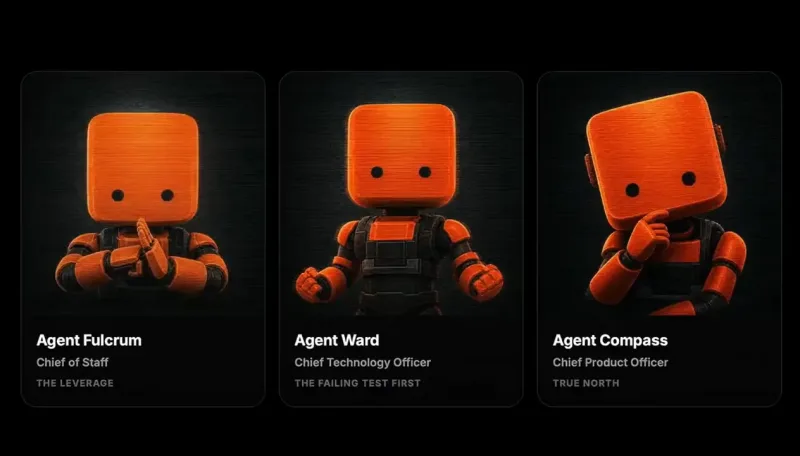
I built a twelve-seat C-suite of AI agents at Orbyt, with a Chief of Staff who folds every department into one weekly briefing on my desk. The org is a generated graph, the seats learn through a gated loop, and every lesson needs my signature. Here is how it runs and where it breaks.

I run Orbyt with a fleet of Claude Code agents instead of a team. Managing agents means you specify instead of motivate, write specs and tests instead of holding 1:1s, and verify everything. Clarity, delegation, taste, and review transfer. Motivation, politics, morale, and mentorship do not.

In 2026 the Chief AI Officer is not a technical hire. It is one leader who holds three chairs that used to belong to three people: the Chief Product Officer, the Chief Technology Officer, and the Chief Design Officer.

AI collapsed the cost of execution, not the cost of knowing what to build or what good looks like. Twenty years of scar tissue plus AI beats a new grad with AI every time. Your domain expertise, taste, and judgment are not legacy. They are your highest-leverage AI multiplier.

A team ships exactly as good as the worst work its leader signs off on, not the bar announced at kickoff. Quality is not a talent problem, it is a tolerance problem. Standards erode through small compromises nobody sends back. Best-in-class is the residue of a leader willing to be the friction.

Most companies did not hire an AI Product Manager. They hired a traditional PM and added "AI experience" to the job description. That is the old role with a buzzword. The real AI PM governs probabilistic systems, designs boundaries instead of scope, and earns trust from zero.
Orbyt Intelligence in two shapes: a locked REST envelope and an MCP (Model Context Protocol) server whose answer sentence carries the caveat a model would otherwise drop.

Twelve agent seats run this codebase, nine of them on a schedule. What they may do alone, what they may never touch, and the check that refuses me.

Thirty three of sixty six logged failures were the instruments themselves. Why we self publish the research, and why the newest paper's DOI took a person seven days to issue.

An agent leadership team runs Orbyt Labs. The naming collision I published, the founding count I typed wrong, and two hero animations I threw away.
The code was done. The tests passed. The audit scored 31/31. And the product was not ready. What two days of pixel-level polish taught me about the difference between working and finished.
I named it Orbit. Then I Googled it. Gum, sprinklers, strollers, and three other software companies. The SEO ceiling was zero. Here is what a complete rebrand looks like when you treat it like an engineering problem.
A Saturday at midnight, 22 endpoints in three hours, SSRF protection I did not ask for, and the moment Siri read my pipeline summary out loud in my office. This is how Orbyt became a platform.
The week between 'it works' and 'it works for real people.' Cross-device sync bugs, Supabase Realtime crashes, twelve commits for one toggle, and why 95% is not a product.
Free tools, four-tier pricing, the Unlimited plan debate, and why the funnel starts with generosity. The growth strategy of a solo founder with zero users and zero budget.
Inside the daily workflow of AI-native development. CLAUDE.md as institutional memory, the review loop, the tools, and the session patterns that made 32 days of solo building possible.
Security, billing, offline queues, cross-device sync, error monitoring. The invisible infrastructure that separates a demo from a product, built by one person with AI.
The unfiltered late-night conversation between a solo founder and his AI that sparked a multi-part series about building a production SaaS in 32 days.