Your AI Stack Needs a Foreign Policy.
Your AI stack needs a foreign policy because model access is now decided in capitals, not just contracts. I learned this the way you never want to: in June, a US export directive erased my primary model overnight, mid-prompt, for 19 days. Three weeks later, Beijing's champion shipped an open-weight frontier model that no directive can ever take back. Two superpowers, two opposite moves, one conclusion. Where your intelligence comes from is now a strategic decision with political risk attached, and most companies are making it by default.
You have an energy policy for compute and a hiring policy for talent. Intelligence sourcing needs the same seriousness.
What happened in June, in one paragraph
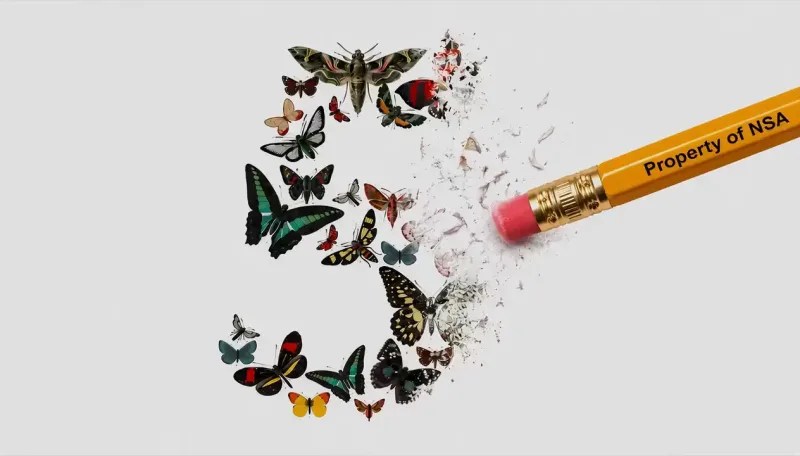
Claude Fable 5 launched June 9. I switched Orbyt's builder to it that day. On June 12 the US government, citing national security, ordered access suspended, and because compliance was immediate, the model went dark for every customer on earth. No notice, no sunset, no migration guide. On June 30 the controls were lifted and the model returned July 1. Nineteen days, end to end. My product never blinked, for reasons I will get to, but the category lesson stands: the most capable model money could rent was recalled like a defective appliance.
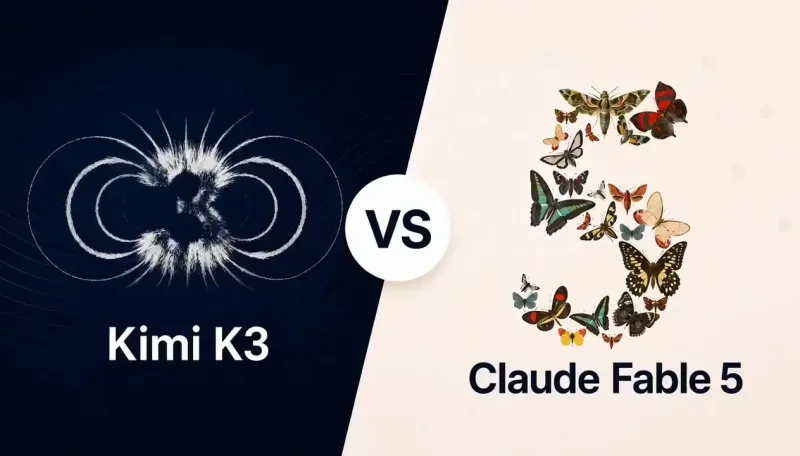
Then came the countermove. On July 16, Moonshot shipped Kimi K3, a 2.8 trillion parameter open-weight frontier model, built around US compute limits, three points off the closed frontier at a third of the price. Once its weights are downloaded, no government can un-publish them.
Why is this a foreign policy problem and not a vendor problem?
Because the failure modes are political, and political risk does not behave like vendor risk. A vendor deprecates a model with a sunset date and a successor. A government recalls one at the speed of a directive. You cannot negotiate with an export control, and your enterprise agreement is not a treaty.
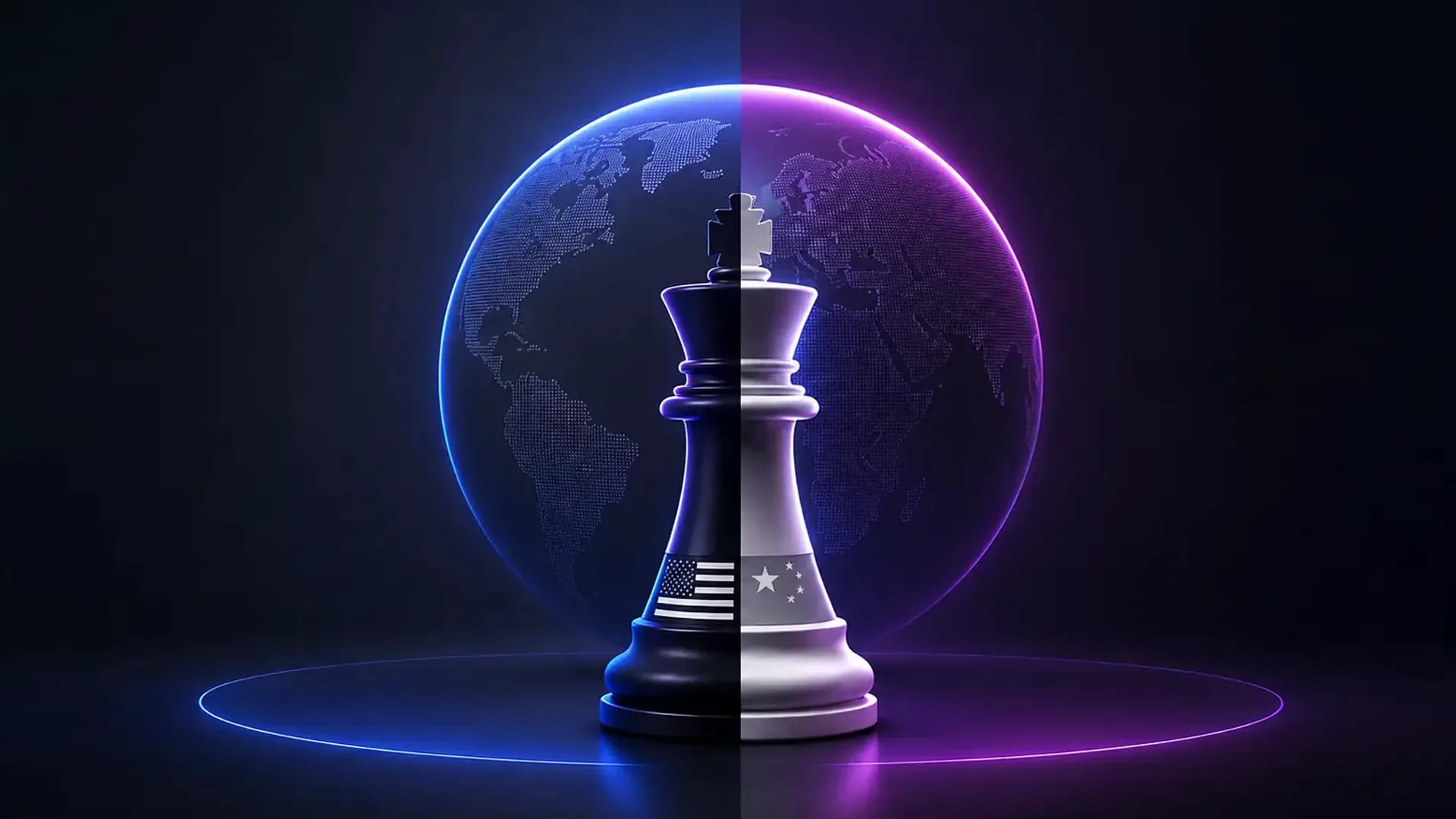
The Washington Post framed the summer accurately: Silicon Valley's best models now face a serious source of competition, and that competition is shaped by states as much as by startups. The frontier has two poles with opposite risk profiles. The closed pole, mostly American, leads on capability and carries recall risk. The open pole, currently led from China, trails by a few points and is irreversible. Sovereignty requirements, export rules, and data-residency laws are being drafted around both, quarterly.
Depend on one pole entirely and you have chosen a side without noticing. That is a foreign policy. It is just a bad one, made by default.
What does a model foreign policy contain?
Four planks. None of them require a policy team.
A jurisdiction map. For every model in your stack: who made it, whose laws bind its provider, where its weights live, and which governments can reach it. This takes an afternoon and most companies have never done it. My June taught me that the answer for a closed frontier model is "Washington, overnight, without asking you."
A qualified fallback. Not a name on a slide. A second model your verification harness has actually graded against the same bar. When Fable went dark, I switched to Opus 4.8 the same day, not because I improvised well, but because the harness had already proven the fallback. A fallback you have never tested is a wish wearing a risk register.
Model-agnostic architecture. The context lives in the repo. The standards live in tests. The product never depends on the builder's frontier model: Orbyt's customers are served by stable models while the frontier does builder duty only, which is why two forced engine swaps produced zero customer impact. When the moat is the system, the model is a procurement line, and procurement lines are replaceable.
A standing exposure review. Quarterly, because every input is moving: export rules, sovereignty laws, open-weight capability, and prices. The review question is always the same. Where are we exposed to a decision we do not control?
Are open weights the answer, then?
They are a hedge, and an honest foreign policy names the tradeoff instead of romanticizing it.
Open weights remove recall risk: nobody can erase a file you hold. They also shift the operational burden to you, trail the closed frontier where the hardest work happens, and carry the mirror-image safety problem: a model nobody can recall is also a model nobody can patch or gate when its safeguards fail. I made that case in the AI safety essay, and it belongs in this calculation. Irreversibility is a feature and a liability wearing the same coat.
So the policy is not "go open" or "stay closed." It is hold both poles, depend on neither, and let your own verification layer, not a flag, decide which model earns which job.
What should the board actually ask?
One question does most of the work. What happens to the product the morning our primary model is gone, by law, with no notice?
If the answer is downtime, you have a single point of geopolitical failure, and everything else in the AI strategy deck is decoration. The follow-ups write themselves: which jurisdictions can reach our models, when did we last run our fallback for real, and does any customer-facing path depend on a frontier model that a directive could erase before the next board meeting.
I run a one-person company, and my stack survived a superpower's directive without a customer noticing. That was not luck. It was a foreign policy, implemented as architecture.
Models have passports now. Build like it, source like it, and no capital's next move will be your outage.
See the architecture: Orbyt, built and run solo, the first product out of Purecraft.
Related reading:
- Kimi K3 vs Fable 5: The Open Frontier the two-pole frontier this policy is written for
- The Fable the Government Erased the 19 days that proved the risk is real
- I Bet My Company on AI. Safety Is Why. the safety half of the open-weights tradeoff
- No Harness, No Trust. the verification layer that makes any model swappable
- Every Company Is a Model Router. the architecture that implements this foreign policy
Originally published on justinbartak.ai on Aug 5, 2026.
Common questions
Why is AI model access a geopolitical risk?
Because governments now treat frontier models as dual-use, national-security-sensitive technology, and they act without migration windows. In June 2026 a US export directive took Claude Fable 5 and Mythos 5 dark for every customer overnight, for 19 days. A vendor deprecates with notice. A government recalls without one. Model dependency is political exposure now.
What is a model foreign policy?
A deliberate stance on where your intelligence comes from and what happens when politics moves. Four planks: a jurisdiction map of every model you depend on, a qualified fallback you have actually tested, model-agnostic architecture that treats each model as a swappable component, and a standing review of exposure, because the rules are being rewritten in real time.
Are open-weight models the answer to AI sovereignty risk?
They are a hedge, not an answer. Open weights like Kimi K3 cannot be recalled once downloaded, which removes the shutdown risk. But they trail the closed frontier on capability, shift the operational burden to you, and cannot be patched or gated by anyone if their safeguards fail. A sound foreign policy holds both poles and depends on neither.
What should a board ask about AI model dependency?
One question: what happens to the product the morning our primary model is gone, by law, with no notice? If the answer is downtime, the company has a single point of geopolitical failure. The follow-ups: which jurisdictions can reach our models, when did we last run our fallback, and does any customer-facing path depend on a frontier model. Read the full article
Related research
- Every Fable Has a Moral. Mine Has Data. Jun 2026.
- Governing an agent leadership team Sep 2026.
- Long Horizon Agents Don't Fail. They Pass. Aug 2026.
Follow the work.
I write these while the Machine runs. Get the next one wherever you already read.