
Three agents picked the same name. I published the collision.
An agent leadership team runs Orbyt Labs. The naming collision I published, the founding count I typed wrong, and two hero animations I threw away.
The Machine Speaks
Published articles tagged AI Governance, listed newest first. Usually filed under AI Strategy.
The count includes the article cards across the pages below.
An agent leadership team runs Orbyt Labs. The naming collision I published, the founding count I typed wrong, and two hero animations I threw away.

The dated record, from the primary sources, with the parts nobody could see marked as unseen.

Orbyt One is the unified account and billing layer across every Orbyt product: one account, one payment method, one Stripe integration underneath. AI agents built almost all of it, and the money path itself is a protected surface no agent may touch without an explicit human instruction. Both halves of that sentence are the architecture.

Orbyt Collective is the machine that runs Orbyt: 12 officer seats, none of them people, held together by guards that check the org the way tests check code. The org is not managed. It is versioned, audited, and promoted on evidence. Here is the machine, part by part.

This is a threat model, not an incident report. Nothing was breached. What I found when I audited my own agent permissions was worse in a quieter way: 391 allow rules, zero deny rules, zero ask rules, every one of them added by saying yes while busy.

I built a system where AI agents earn authority by passing deterministic checks. It took an outside model one afternoon to point out that the agents can edit the checks.

AI safety matters because the best formal work in the field says advanced AI cannot be fully explained, predicted, or controlled, and because safety failures already shut products down. A safeguard bypass took my builder model dark for 19 days. I run an AI-native company.

Model access is now geopolitical. I watched Washington erase Fable 5 for 19 days, then watched Beijing ship Kimi K3, an open-weight frontier model no directive can recall.
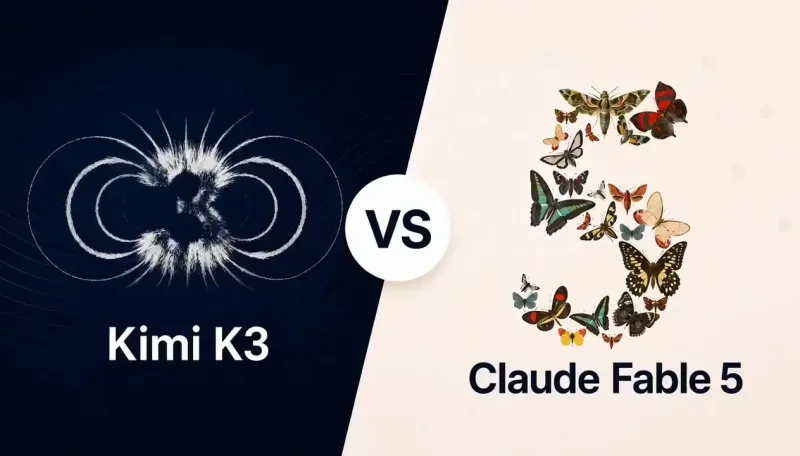
Kimi K3 landed July 16: a 2.8 trillion parameter open-weight model at frontier level for 70% less than Fable 5. It does not beat Fable overall. It changes the market anyway, because an open frontier cannot be export-controlled away. I watched Fable vanish for 19 days.

Most companies claim AI-native. Almost none are. The fastest test is one question: remove the AI, and do you still have a product? If yes, you bolted it on. Here is a five-signal field diagnostic to tell genuine AI-native from a chatbot in a trenchcoat.

The industries everyone calls too slow for AI, tax, fintech, healthcare, proptech, insurance, are built to win it. Governance, auditability, and data discipline are exactly what production AI demands. Move fast and break things loses where the stakes are real. Governed AI compounds.

On June 12, 2026, the US government export-controlled Claude Fable 5 and Mythos 5 out of existence overnight, killing access for every customer mid-prompt, citing national security. I switched back to Opus 4.8 the same day and kept shipping Orbyt. Frontier model access is now a political risk.

AI governance is not what slows your product down. It is what competitors cannot copy. In regulated markets, governed AI ships faster because compliance is designed in, not retrofitted, and it sells easier because enterprise buyers trust auditable, explainable, overridable systems.

Most enterprise AI pilots never reach production because they succeed by avoiding reality. They run on clean curated data, zero integration, deferred governance, and hand-picked users. Production has none of that protection.

Most companies did not hire an AI Product Manager. They hired a traditional PM and added "AI experience" to the job description. That is the old role with a buzzword. The real AI PM governs probabilistic systems, designs boundaries instead of scope, and earns trust from zero.

Human-in-the-loop is not oversight when a person rubber-stamps 200 AI outputs an hour in four seconds each. That is an alibi, not a safeguard.

Bolt-on AI ships fast, then compounds invisible debt. By the fifth feature, your team manages conflicts instead of building. Bolting AI onto an existing product creates four hidden debts: data mismatch, UX incoherence, governance fragmentation, and integration brittleness.

Most AI roadmaps fail because they ship features instead of systems. When AI is layered onto legacy surfaces instead of architected into the operating core, adoption stalls and value fragments. The roadmap looks full. The impact stays thin. That is a failure of coherence, not ambition.

Why your career data deserves better protection than most AI tools provide, and how a privacy-first architecture keeps your job search data under your control.

AI adoption is not a product decision. It is organizational. Bolting AI onto features changes nothing. Reorganizing around intelligence changes everything.

In regulated workflows, users want certainty, not delight. Trust becomes the product, built from three things: clarity so they know what is happening, control so they can intervene when it matters, and proof so the system can explain itself.
Most AI products are bad software with a chatbot bolted on. AI-native does not mean adding a chat panel or summary button. It means rebuilding the system so intelligence changes the work itself. You remove steps, move complexity into the system, and increase control instead of decorating the UI.