
Two Agents Agreed. Who Made the Deal?
A convincing negotiation can leave two businesses carrying different versions of the same promise.
The Machine Speaks
Moats, pricing, build versus buy, and model portability. The economics of running an AI native company.
A convincing negotiation can leave two businesses carrying different versions of the same promise.
We renamed Orbyt Jobs to Orbyt Labs on August 20, 2026. Two of our products help you get a job. The third is an experiment in not needing one. A company named after one product could not hold that contradiction, and a lab can.

In 2023, wrapper was an insult: a thin app over someone else's model, doomed when the model ate it. In 2026 the application layer captured the value while frontier models commoditized into swappable engines. I replaced the model under Orbyt twice, once by government order, and nothing broke.

Your moat is now an anchor when the scale, codebase, and process that protected you become the reason you cannot rebuild AI-native. The challenger starts on the foundation you cannot afford to switch to. Incumbents do not lose to AI startups on talent.

No answer engine publishes how it picks citations, and most AEO statistics come from vendors selling AEO services. That does not make the work optional. It makes it an experiment.

Model access is now geopolitical. I watched Washington erase Fable 5 for 19 days, then watched Beijing ship Kimi K3, an open-weight frontier model no directive can recall.

Build vs buy is not dead. The calculus inverted. You used to buy because building was slow and expensive. AI collapsed both. The old buy-for-speed default is gone. The new rule is to build what compounds your edge and rent only true commodity.

AI agents are becoming buyers. Gartner expects 25% of enterprise software purchases to involve agent mediation by the end of 2026, and zero-click commerce is moving discovery, comparison, and checkout inside the AI conversation. GEO got you quoted.

Per-seat pricing is not dead, but in AI-native categories it is on borrowed time. It still works for tool SaaS where a human logs in to do the work. When the software does the work, the seat stops measuring value, and usage and outcome pricing take over.
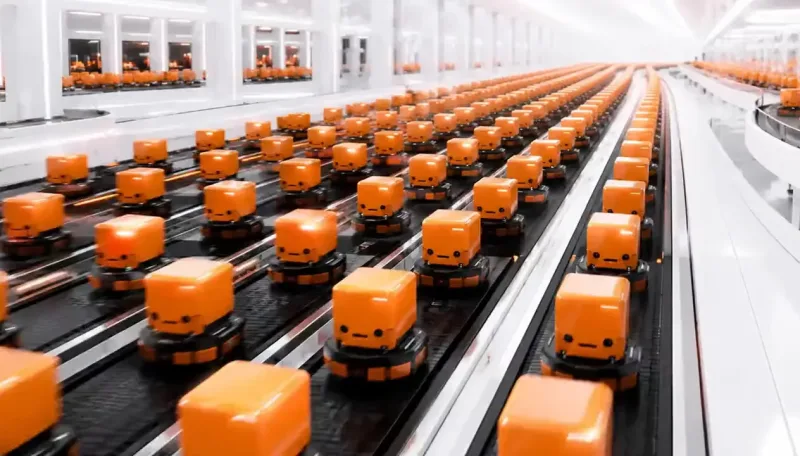
When the cost of building collapses, velocity stops being a nice-to-have and becomes a structural moat. Speed compounds. Faster shipping means faster learning loops, and learning loops widen the lead like interest. Orbyt shipped 243,000 lines in 32 days and never slowed down.

The industries everyone calls too slow for AI, tax, fintech, healthcare, proptech, insurance, are built to win it. Governance, auditability, and data discipline are exactly what production AI demands. Move fast and break things loses where the stakes are real. Governed AI compounds.

Tiny AI-native teams now out-ship incumbents. One operator with agentic tooling builds what used to take fifty people. Orbyt is the proof: production SaaS, solo, 32 days, about $400. Incumbents cannot match the speed, because their bottleneck is headcount and process, not talent.

On June 12, 2026, the US government export-controlled Claude Fable 5 and Mythos 5 out of existence overnight, killing access for every customer mid-prompt, citing national security. I switched back to Opus 4.8 the same day and kept shipping Orbyt. Frontier model access is now a political risk.
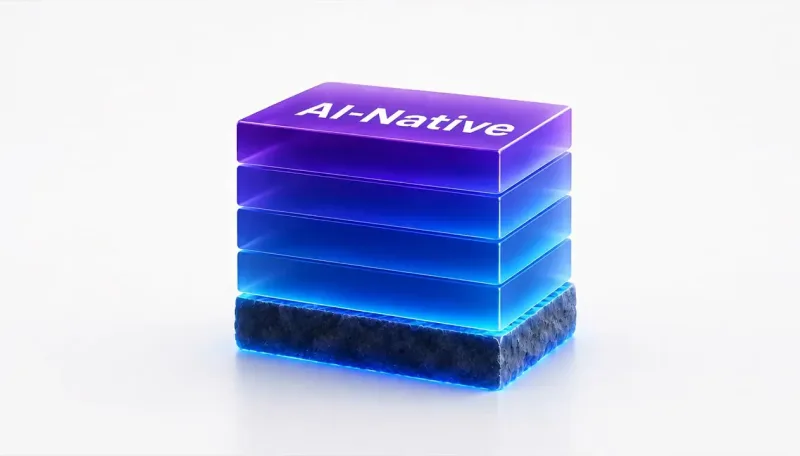
Every company claims AI-native. Almost none are. The few that build intelligence as the foundation, not a bolt-on, own a moat the rest cannot cross.

AI governance is not what slows your product down. It is what competitors cannot copy. In regulated markets, governed AI ships faster because compliance is designed in, not retrofitted, and it sells easier because enterprise buyers trust auditable, explainable, overridable systems.

Most enterprise AI pilots never reach production because they succeed by avoiding reality. They run on clean curated data, zero integration, deferred governance, and hand-picked users. Production has none of that protection.

Most startups don't die from lack of ambition. They die from noise. In the early days the real threat isn't competition, it's confusion. Confused teams ship clutter, clutter creates hesitation, and hesitation kills momentum.

At Norhart, we reimagined capital as propulsion. The $70M SEC framework evolved into a growth engine.

At Taxa, we reimagined professional tax from first principles. In under a year, that vision secured $113M in funding.

Taste decides whether an early stage product wins. Zero to one is not a tech race or a feature contest. Speed is table stakes because everyone moves fast. The real differentiator is judgment: knowing what to build, what to cut, and what to walk away from while everything is still ambiguous.

Sustainable growth is a design problem, not a system problem. You can buy attention and hack acquisition, but if a product feels clunky or transactional, people leave. Design is the first signal of trust and the deepest growth lever.