Zero-to-One Is a Taste Game
Building an early stage product is not a tech race. It is not a contest to ship the most features the fastest. Zero to one (opens in a new tab) is a taste test, and most teams fail it.
In the earliest stages, speed is table stakes. Everyone can move fast. The real differentiator is judgment. The ability to make the right calls while everything is still ambiguous. The best teams do not just ship quickly. They ship selectively. They know what to build, what to cut, and what to walk away from.
They can look at a prototype that technically works and still say, this isn't it.
That ability to sense what is off, what is not yet the future, is the whole game.
Taste is product sense at the highest level
Taste is the internal compass that tells you something is not good enough even when it passes acceptance criteria. Paul Graham wrote the definitive essay on taste for makers (opens in a new tab) two decades before AI made it the scarce input.
Taste notices the gap before users can name it. Taste recognizes when a clean UI is solving the wrong problem. Taste knows the difference between done and loved.
And no, this is not just preference.
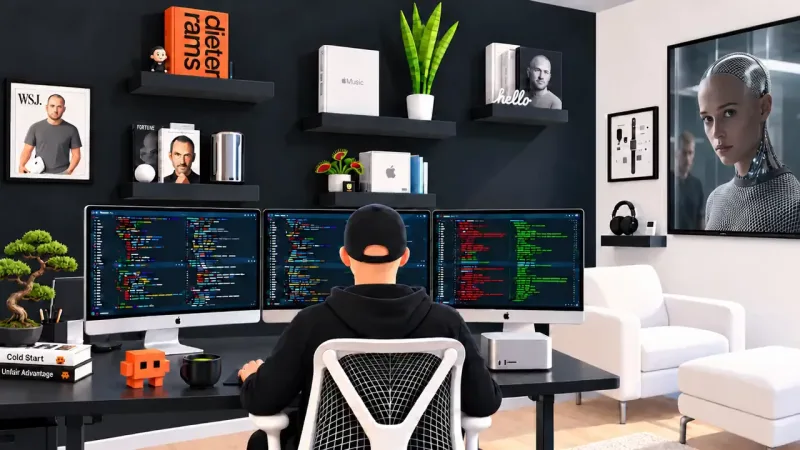
Taste is pattern recognition, built through exposure to great work and relentless standards. It is the accumulation of thousands of decisions where you chose clarity over clutter, simplicity over cleverness, and craft over shortcuts.
It is what you build when you study the best products, obsess over details, and keep the bar high even when nobody is watching.
What taste looks like in practice
- You cut the feature that makes the demo impressive but the product confusing
- You remove the option that weakens the story
- You redesign the flow that works but does not feel inevitable
- You protect the core moment where value becomes obvious
- You choose coherence over coverage
Taste is not adding more. It is refusing what does not belong.
The hard truth about taste
Taste cannot be faked.
Users feel it immediately. They may not articulate it, but they respond. They lean in or they drift away. They trust you or they don't.
But taste can be developed.
Study the greats. Refine your eye. Build more than you ship. Throw out 80 percent. Ask, does this feel inevitable? Raise the bar. Raise it again.
Because in the end, if users do not love it, investors will not either.
No taste, no traction. No traction, no runway.
I have lived this principle building products from zero to one. At Taxa, where we shaped an AI-native tax platform. And at Gro CRM, where we designed a multi-tenant CRM from the ground up. In both cases, taste was the deciding factor.
Speed gets you to a demo. Taste gets you to a product people love.
Related reading:
- Startups Need Taste, Not Design Systems
- AI Will Commoditize Everything Except Taste
- Startups Win with Clarity, Not Complexity
- Taste Is a Strategy. the board-level case: when execution commoditizes, the chooser is the company
Originally published on justinbartak.ai (opens in a new tab) on Jul 31, 2025.
Sources
- Paul Graham, Taste for Makers (2002) (opens in a new tab) Retrieved Nov 11, 2026.
- Penguin Random House, Zero to One: Notes on Startups, or How to Build the Future (2014) (opens in a new tab) Retrieved Nov 11, 2026.
Zero to one questions? Answers.
Follow the work.
I write these while the Machine runs. Get the next one wherever you already read.
- Subscribe on Substack (opens in a new tab)
- RSS feed
- Bluesky (opens in a new tab)
- Threads (opens in a new tab)
Add Orbyt Labs as a preferred source on Google (opens in a new tab)