The Wrapper Won.
The wrapper won. The 2023 sneer, "it's just a GPT wrapper," predicted that application companies built on foundation models were doomed: thin layers to be crushed when the model provider shipped the same feature, while the real value accrued to whoever owned the model. Three years later the scoreboard reads the other way. Frontier models commoditized into near-interchangeable engines whose prices fall every quarter, and the application layer kept the customer, the context, the workflow, and the trust. The sneer mistook the engine for the car.
Nobody brags about owning an engine. They brag about owning the road the customer takes every day.
What did the sneer get wrong?
It assumed the model was the product. It was infrastructure.
The pattern has a long history. The database was going to eat every application built on it. The cloud was going to eat every SaaS company built on it. Instead, Oracle and AWS became enormously valuable utilities while the application layer above them became the largest software economy ever created. Value pools at the layer that owns the customer's workflow, not the layer that sells the horsepower underneath it.
The wrapper sneer ignored that history because in 2023 the model felt like magic and the application felt like a form on top of magic. But magic that every competitor can rent is not a moat. It is a commodity with great marketing.
What actually commoditized?
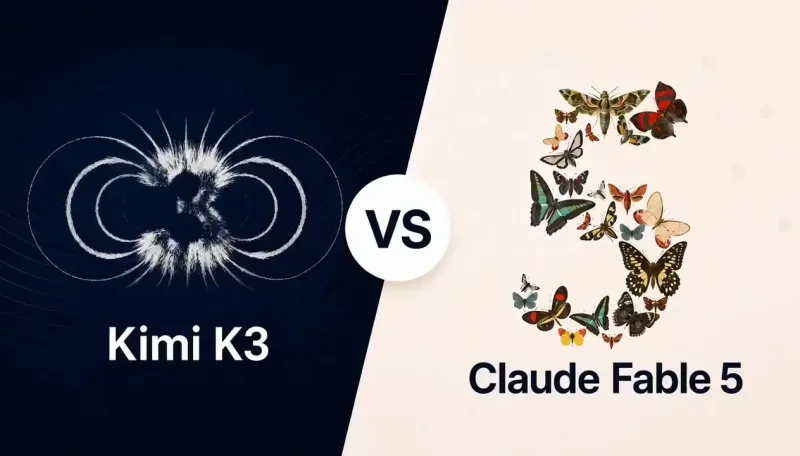
The frontier itself. Watch the numbers converge: on the leading intelligence index the top closed models sit at roughly 60 and 59, and Kimi K3, an open-weight model, landed at 57 at roughly 30% of the frontier's list price. Three points now separate the best rentable engine from the one you can download and keep. Open weights keep resetting the price floor, and every closed-model contract gets negotiated in their shadow.
And I do not have to argue this from charts, because I ran the experiment on a production company. The frontier model under Orbyt was replaced twice in one stretch: once by choice, and once when a US export directive erased it overnight for 19 days. Shipping never stopped. Customers never noticed. If the value had lived in the model, that story ends the product. It was a line in a procurement log.
When you can swap the crown jewel twice in a month without a customer noticing, it was never the crown jewel.
Where did the value actually go?
Into everything the sneer dismissed as "just" the wrapper.
The spec: the accumulated definition of what the product actually is, encoded in docs, rules, and tests. The context: everything the system has learned, living in the repo where any model can use it. The verification layer: the harness that turns model output into trustworthy software, which is the difference between a demo and a company. The workflow and distribution: the customer's daily path, the data of every run, the trust that compounds with uptime. None of that ships with an API key, and all of it survives a model swap.
Here is the test that separates the doomed wrappers from the winning ones.
| Thin wrapper | Thick wrapper | |
|---|---|---|
| What it adds to the model | A prompt and a UI | Spec, context, verification, workflow |
| A model update is | An extinction event | A free upgrade |
| A model swap is | A rewrite | An experiment |
| The moat is | Borrowed | Accumulated |
| 2023's verdict | Correct | Wrong |
The sneer was right about thin wrappers, and they died on schedule. It was wrong about the category, because the winners were never thin. They wrapped the model in everything it could not do for itself.
The strategic inversion nobody updated on
Read the risk table as it stands in 2026 and the 2023 consensus is exactly backwards. The model layer is where the volatility lives now: rentable, recallable by governments, repriced every quarter, converging with free alternatives. The application layer is where the defensibility lives: owned context, owned verification, owned distribution, and a tailwind every time any lab ships a better engine.
That is the quiet beauty of the thick wrapper position. Model progress, from anyone, anywhere, makes your product better the week it ships. You are the only layer in the stack that wins no matter who wins.
What should you do with this?
If you build: stop apologizing for being an application company. Build the thick wrap on purpose: spec, context, harness, workflow, distribution. Stay model-agnostic by architecture, so every frontier release is your upgrade and no lab's roadmap is your ceiling. The play is not to own the engine. It is to be the system the engine works for.
If you buy or invest: retire "is it just a wrapper" as a question. Ask the one that discriminates: what survives when the model underneath changes? Vendors with a real answer own their value. Vendors without one are borrowing it at a rate that resets every quarter.
The model is the engine. The wrapper is the car, the road, and the driver's trust. The car company won.
See a thick wrapper running: Orbyt, built and run solo, the first product out of Purecraft.
Related reading:
- Kimi K3 vs Fable 5: The Open Frontier the price collapse that finished the commoditization
- The Fable the Government Erased the involuntary proof that the moat was not the model
- Verification Is the New Literacy the layer that turns rented intelligence into owned trust
- Every Fable Has a Moral. Mine Has Data. the voluntary swap, with the data
Originally published on justinbartak.ai on Aug 20, 2026.
Common questions
What is an AI wrapper, and why was it an insult?
A wrapper is an application built on someone else's foundation model. In 2023 it was a sneer: the thin layer would be crushed when the model provider shipped the same feature, so real value would accrue to whoever owned the model. The prediction assumed the model was the product. It was not. The model was the engine.
Did application companies really beat the model layer?
The value split, and the application layer took the share the sneer said it could not hold. Frontier models commoditized into near-interchangeable engines whose prices keep falling, with open weights like Kimi K3 resetting the floor at roughly 30% of frontier list price. Applications kept the customer, the context, the workflow, and the trust, which is where pricing power lives.
What separates a thin wrapper from a thick one?
A thin wrapper adds a prompt and a UI to a model, and it deserves the sneer, because a model update erases it. A thick wrapper owns what the model cannot: the spec, the context, the verification harness, the workflow, the distribution, and the accumulated data of every loop it has run. Swap the model under a thick wrapper and nothing breaks. That is the test.
How do you know the value is not in the model?
Swap the model and watch what happens. Orbyt's frontier builder model was replaced twice in one stretch, once by choice and once when export controls erased it overnight, and shipping never stopped: over 425,000 lines and 11,372 tests held the standard, and zero customers were affected. If the moat were the model, that story ends the product. It was a footnote. Read the full article
Related research
Follow the work.
I write these while the Machine runs. Get the next one wherever you already read.