
Founder, CEO and Chief AI Officer of Orbyt Labs
Justin Bartak
I’m testing in public whether AI can run a product, then a leadership team, then a company.
I design the product, engineer the AI, publish the research and take it to market at Orbyt Labs. Taste decides what ships.
Start with The Walk, a fixed-scope AI agent assessment: the decision, the rules, the test and the next step.
I built Orbyt Jobs, a job search tracker, and Orbyt Intelligence, a salary estimate API. Both are in early access. I publish how AI agents help me build them, and how the Collective, my AI leadership team, works.
The window needed to be bigger.
In 2007 my company, Ntractive, sent Apple a working build of Elements. It reached Apple’s weekly leadership review. Steve Jobs sent the note back himself: our fixed desktop window needed to be bigger. We explained our technical limits. He gave us Apple’s entire engineering team for a week, and it happened. Elements went on stage at WWDC 2007. I have not taken a technical limit as the answer since.
“a desktop experience with a web app development ease”
Track record.
I have founded companies and had two exits.
Orbyt Labs
Founder, CEO and Chief AI Officer of Orbyt Labs. Building products with AI agents and publishing the operating record. Orbyt operating record
Taxa / Aiwyn
First hire. Ran product, front-end engineering and design, all AI-first. My word (opens in a new tab)
Norhart
Led work across product, design and AI engineering on Norhart Invest. My word (opens in a new tab)
Norhart Invest’s offering is on file with the SEC. SEC offering circular, Jul 3, 2023 (opens in a new tab)
Gro CRM
Co-founded Gro CRM. My word (opens in a new tab)
Led product, front-end engineering and design on a multi-tenant CRM. My word (opens in a new tab)
Gro CRM won FinancesOnline Rising Star and Great User Experience awards. My word (opens in a new tab)
Ntractive
Founded Ntractive and built Elements. My word
Elements appeared in the WWDC 2007 IT State of the Union session. WWDC session transcript (opens in a new tab)
98 failure modes, on the record.
Every number links to its record, failures included.
I’ve used Claude since May 2024 and Claude Code since its research preview. I also build with Codex, and I’ve worked at AI-first companies since 2024: Taxa, Aiwyn and Orbyt Labs. How I build with them.
Published snapshot: . Orbyt Labs is describing its own work. These are counts of activity and checks. Not a passing run, not accepted work, not customer outcomes, not full autonomy. Failures nobody has found or written up are not in these records.
- 98
Documented failure modes
Failures caught, reviewed and published.
Value last changed .
Read the record - 1M
Lines of code
Every project’s code, added up across repositories.
Value last changed .
Read the record - 69,041
Tests
Every project’s own tests, added up across repositories.
Value last changed .
Read the record - 101
Audit categories
Categories of problem the system checks for, like leaked secrets or broken links.
Value last changed .
Read the record - 235
Recorded agent runs
Runs in the operating ledger, completed or failed.
Value last changed .
Read the record
“Value last changed” dates the published value, not when the underlying work happened.
Open numbers: CC BY 4.0.
01 / The controls
Harness engineering.
Harness engineering turns an agent’s mistakes into improvements to the system around it. At Orbyt Labs, I use tests, checks, recorded failures and explicit authority to govern AI work. The public record shows what those controls catch, where they fail, and what changes after a miss.
Now agents explain their limits to me. I know how that sentence can end. What fails goes on the public record.
The log that lied.
An API response said a role or city was not found. Its log recorded a bad request. 13,364 tests passed for a month, because each tested one side and none checked that the two agreed. Reading the live logs against the actual response exposed the mismatch. A code check now compares logged status codes with the error registry. Restoring the defect made the check fail.
Check added . Read the failure and its countermeasure.
“Do not ratify as-is.” An OpenAI model I asked to review my operating plan told me that. I patched two blockers and waived the third. One patch later proved weaker, and I accepted that risk on the record. D-0028, D-0030.
02 / The connections
AI engineering.
I architect the AI systems at Orbyt Labs. The Machine: AI agents with charters, fences and records, on schedules and on request. The ladder that grades their autonomy. The harness that turns a failure into a test. The halt and cancel controls. The console that sends the commands. Orbyt Intelligence, its API and its Model Context Protocol (MCP) server. Research on datasets designed for AI retrieval.
Leave out the role, and the API names the missing input and tells the caller what to send next. Error messages are part of the interface.
03 / The interface
AI design.
AI design makes a system’s behavior clear enough for a person to act. I design the product, the interface and the controls together. That means showing sources beside salary estimates and putting the limits of an agent’s authority beside the work it can do.
A stop button should not claim success on a click. In the Machine’s console, a click records a request. The screen says requested until a separate read confirms the effect. The command record shows decisions, and the HALT record shows stops. Neither record proves which rules the code enforces.
This website is the public side of the same work. Shared colors keep it consistent, and a code check refuses the palette values that should come from them. I treat an animation as a claim. In the Kill Switch hero, lifting a stop starts no run, because in the Machine it starts none.
At Taxa, I was the first hire and ran product, front-end engineering and design, all AI-first. My account is in the track record.
04 / The path to a customer
AI product.
I build products around a task someone needs to finish, with a clear offer and a way to try them. Orbyt Jobs organizes a job search. Orbyt Intelligence serves salary estimates. The free tools, sample API demo and published methods let people inspect the work.
- Problem
What does this job pay, and what is that number based on?
- Product
- Entry point
- Offer
Early access
Product signups remain on a waitlist. This shows the path. It does not show adoption, revenue or conversion.
Methods.
Orbyt Labs Methods are how we build with AI agents, written down where anyone can check them. Each one shows the practice in use, the record behind it and what it has not shown yet.
Harness Engineering
How agent mistakes become standing instructions, tests, checks and human-approved gates.
Autonomous Operation
How far the Machine is from running on its own, measured, and what still stops it.
Kill Switch
What stops the Machine and how fast: each stop, what it does not stop and what has not been shown yet.
Synthetic Personas
A synthetic review panel held against agent drafts. Critique, never evidence.
How I decide.
These rules guide the interfaces, checks and research at Orbyt Labs. Each links to the work behind it.
Walk the whole path.
Start with what a person needs to finish. Test the whole journey.
The Walk and its deliverablesPut the source beside the number.
Show what was measured, what was modeled and where each came from.
Salary methodologyTest the check.
Put the defect back. Watch the check reject it. Test correct input too.
The worked failure and checkKeep the override.
A person must be able to stop the work and change the decision.
The HALT recordPublish what failed.
Failures stay on the record.
The failure corpus
The rules I build by are the Creed.
Writing and research.
I write about the systems I build and the questions they leave open. Cold Start tells the story of building Orbyt Jobs with Claude.
- Coming soon
Cold Start. One Founder. One AI. No Team.
Justin Bartak with Claude.
- Preprint
Agent-Native Dataset Design: Schema, Licensing, and Distribution Patterns for LLM Retrieval
Justin Bartak. Published .
DOI: 10.5281/zenodo.19754393 (opens in a new tab) - Preprint
Governing an Agent Leadership Team
Justin Bartak. Published .
DOI: 10.5281/zenodo.22683647 (opens in a new tab)
The papers report methods and limits. Posting a preprint is not peer review or independent validation.
Recent field notes
- A Model Upgrade on a Frozen Dependency Review Updated
- Every Guard Must Prove It Can Stay Silent Updated
- 98 Ways the Agents Were Confidently Wrong Updated
Press and biography
Use the linked biography and downloadable portrait. The career record carries its sources. For an executive search, interview or speaking inquiry, email hello@orbytlabs.ai with the topic, audience and deadline.
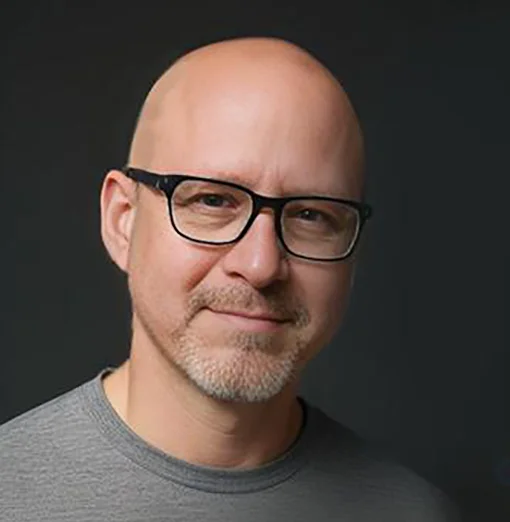
The short version.
Justin Bartak is the Founder, CEO and Chief AI Officer of Orbyt Labs. His products include Orbyt Jobs, a job search tracker for applications, contacts and follow-ups. Orbyt Intelligence serves salary estimates through an API and publishes the methods behind them.
He wrote Cold Start with Claude and publishes preprints on agent governance and data designed for AI retrieval. AI agents help build the software and run workflows within defined limits. He publishes the test counts, failures and decisions behind that work.
Before Orbyt Labs, he founded Ntractive and built Elements. Elements appeared at WWDC 2007 (opens in a new tab). He co-founded Gro CRM, a multi-tenant CRM, and led product, front-end engineering and design. At Taxa, he was the first hire and ran product, front-end engineering and design, all AI-first. At Norhart, he led work across product, design and AI engineering on Norhart Invest.
What people ask.
Who is Justin Bartak?
Justin Bartak is the Founder, CEO and Chief AI Officer of Orbyt Labs. AI agents help build software and run workflows within defined limits. His founder profile links the products, research, operating records and sources for his career history.
Is Justin Bartak trying to run a company without a human?
That is the question he is testing. Today there is one human in the loop, and it is him: he makes the calls that stay human and holds the stop. Today, no: AI agents work within defined limits under his authority, and a completed run does not mean the output was accepted or that the company ran unattended. The Machine is how he finds out whether he is still needed, and the record shows how far it has come and what still stops it.
How does Justin Bartak use harness engineering?
Justin Bartak uses tests, audit checks, failure records and authority rules to govern AI agents at Orbyt Labs. How We Build documents his implementation and its evidence. The Orbyt Labs glossary credits the practice’s wider history.
How does Justin Bartak approach AI design?
Justin Bartak designs AI interfaces, information and controls together. The Orbyt Labs salary methodology separates estimates from observed wages. Its agent governance pages explain human authority.
How can I work with Justin Bartak?
Justin Bartak takes selected consulting projects through Orbyt Consulting. The first engagement, The Walk, assesses a workflow, pilot or decision. It returns a decision, operating rules, a test and a next step. The consulting page explains the scope and accepts inquiries.
Cite this page
Use this profile for biographical context. Cite the linked paper or dataset for its findings.
Bartak, J. (2026, November 11). Justin Bartak, Founder, CEO and Chief AI Officer. Orbyt Labs. https://
Profile revised .
Work with me.
Bring me a workflow, a pilot or a decision, and the reason it cannot change. Start with The Walk. Leave with a decision, operating rules, a test and the next step. I take selected projects where product, design, engineering and AI have to work as one.