Simple Is Expensive.
Simple is the most expensive thing you can build. Not the cheapest. The most expensive. Every clean surface is paid for in decisions someone refused to pass on to the user. A simple screen is not a screen with less on it. It is a screen that absorbed a hundred arguments so the person using it would never have to.
That is the part nobody budgets for.
People look at a simple product and assume it was easy. The opposite is true. Easy is adding. Easy is the settings panel with forty toggles. Easy is shipping the option instead of making the call. Simple is what is left after someone did the expensive work of deciding on the user's behalf.
Simple is a line item, not a taste
Treat simple like a feeling and you will never afford it. Treat it like a cost and you can plan for it.
Here is what simple actually buys, and what each line costs you.
- Features killed after they shipped, sometimes after a team spent a quarter building them
- Senior people, because juniors add and seniors remove
- A slower roadmap, because every deletion is a decision someone has to defend
- The meeting where you tell a stakeholder their pet feature is gone
None of that shows up in a design review. All of it shows up on the P&L.
When a CFO asks why the simple version took longer than the busy version, the honest answer is uncomfortable. The busy version is just the sum of everyone's requests. Nobody had to disappoint anyone. The simple version required someone to stand in a room and say no to people with more power than them.
Complexity is what you ship when no one is willing to pay the cost of clarity.
What Apple and Stripe actually pay
Apple and Stripe are not the bar because they have better taste. They are the bar because they pay a price the rest of the market refuses to pay.
Apple ships fewer products than it could. Fewer SKUs. Fewer ports. Fewer settings. Each subtraction is a sale they chose not to make, a customer they chose to disappoint, a feature their competitors will use against them in a spec sheet. They eat all of that to keep the surface calm. That is not aesthetics. That is revenue they walked away from on purpose.
Stripe pays in a different currency. Its simplicity lives in the developer experience. Seven lines of code to take a payment. Error messages that tell you exactly what went wrong and what to do next. Documentation treated as a product, not an afterthought. Behind that ease sits an enormous amount of work absorbing the chaos of global payments, card networks, and compliance so the developer never has to think about it.
The cost is invisible by design. That is the point.
Both companies could ship faster by passing complexity downstream. Add the toggle. Expose the edge case. Let the user figure it out. They refuse. The simplicity you feel is the complexity they agreed to own.
AI made adding free, which made simple harder
Here is the new problem, and it is specific to this moment.
For most of product history, complexity had natural friction. Every feature cost real engineering time. Every screen cost design hours. The budget itself was a forcing function. You could not add forever, because adding was expensive.
That friction is gone.
AI collapsed the cost of adding. A new setting, a new screen, a new flow, a new edge case handler. Nearly free. So teams add. Not because they decided to, but because they can, and because no one stopped them. The path of least resistance now points straight at bloat.
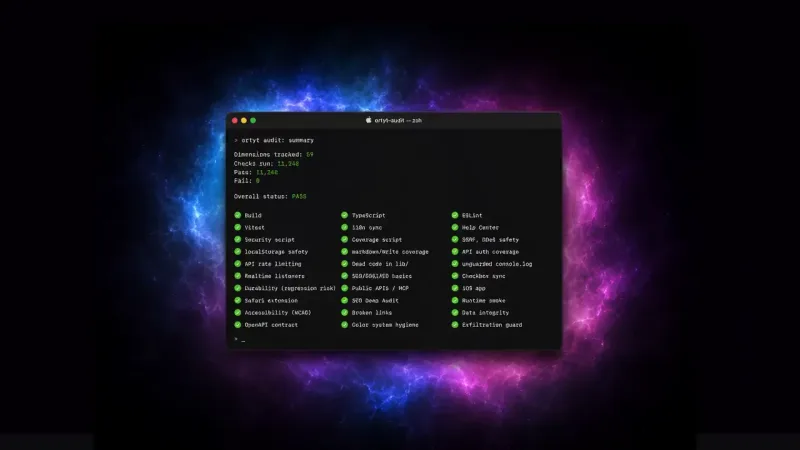
I watched this play out building Orbyt, the first product out of Purecraft. An AI-native job search platform, built solo in thirty-two days for roughly four hundred dollars. 243,000 lines of code. 4,124 tests at launch. When you can generate a feature in an afternoon, the temptation is not theoretical. It is constant and frictionless. The hard part of those thirty-two days was not building. It was refusing. Every day was a small fight against my own ability to add one more thing.
That is the inversion nobody is ready for. The cheaper adding gets, the more expensive restraint becomes, because the temptation is now infinite.
The best teams are spending their newfound speed on subtraction, not accumulation. Everyone else is spending it on surface area.
The expense is political, not technical
Removing something is technically trivial. Deleting a feature takes an afternoon. So why is simple so hard to ship?
Because the cost is not in the deletion. It is in the defense.
Every feature in a mature product has a sponsor. Someone shipped it. Someone presented it to the board. Someone's bonus referenced it. When you propose removing it, you are not editing a screen. You are telling a person their work no longer earns its place. That conversation is the real expense, and it is paid in something most orgs are short on. Courage.
This is why complexity compounds quietly. Not through one bad decision, but through a thousand well-meant ones nobody wanted to fight about. A toggle here to satisfy sales. A field there to satisfy legal. A second flow to satisfy the enterprise account. Each one reasonable. Each one defended by someone. The product gets heavier one polite compromise at a time, and no single meeting is ever where it went wrong.
The simple product requires someone to absorb all of that friction personally. To send work back. To be the one who says not yet. To disappoint people on purpose, repeatedly, and stay liked enough to do it again next week.
Most organizations cannot build simple because no one in the room is willing to be the bottleneck.
You cannot delegate the deletions
There is a reason simple correlates with senior people, and it is not skill.
Anyone can be told to add. Adding is a task. You hand it down. But subtraction cannot be delegated, because subtraction requires authority over the people whose work gets cut. A junior designer can make a screen beautiful. Only someone with standing can walk into a room and tell three departments their requests did not make it.
That is why the price of simple is structural. It is not a design budget. It is a leadership cost.
I learned the weight of this in regulated environments. At Taxa, we reimagined professional tax from first principles. The product handled real consequences, where one incorrect field can trigger an audit. The instinct in regulated work is to add. Add a warning. Add a confirmation. Add a disclaimer. Cover yourself. We did the harder thing. We absorbed the complexity into the system so the surface stayed calm and the user stayed certain. That discipline is part of why it earned $113M from KKR and Bessemer Venture Partners and was acquired by Aiwyn in under nine months. With a team of four.
Four people. The simplicity was not despite the small team. It was because of it. Fewer people meant fewer feature sponsors to negotiate against. Less surface area to defend. The constraint was the craft.
What simple actually costs you
Be honest about the bill before you commit to it.
Simple costs you the comfortable launch, because you will ship later than the team that just shipped everyone's requests. Simple costs you the easy yes, because you will spend your political capital on no. Simple costs you the comparison, because your spec sheet will look shorter next to a competitor who never said no to anything.
What you get back is the only thing that survives.
A product where every element earned its place. A surface a customer trusts because it never makes them work. A position no commodity can flood, because cheap can copy your features but cannot copy your restraint. When AI makes everything addable, the company that subtracts is the one that still feels intentional.
The middle fills up automatically now. Free, fast, and forgettable. The only place left worth standing is the expensive one.
Final thought
Simple is not the absence of effort. It is the most expensive effort there is, paid in features killed, conversations survived, and the daily discipline of refusing what you could so easily add.
Anyone can spend AI's speed on more. The rare team spends it on less.
So price it honestly. Staff it with people who can say no. And protect the surface like the asset it is.
Let's stop confusing simple with cheap. And start paying for the discipline that makes it.
See this in practice: Orbyt, built solo in 32 days and Taxa AI-native platform.
Related reading: The Rise of Apple-Inspired UX and Minimalism, Building AI-Native Apps with Taste, and Startups Win With Clarity, Not Complexity.
Originally published on justinbartak.ai on Jun 1, 2026.
Common questions
Why does a simple product cost more to build than a feature-heavy one?
Simple costs more because someone has to make the decisions instead of passing them to the user. Adding is easy. Subtraction means killing shipped features, defending every deletion, and disappointing stakeholders on purpose. A simple screen absorbed a hundred arguments. That work never shows up in a design review, but it shows up on the P&L.
How has AI changed the cost of building simple software?
AI collapsed the cost of adding. New settings, screens, and flows are nearly free, so the path of least resistance now points straight at bloat. That inverts the old math. The cheaper adding gets, the more expensive restraint becomes, because the temptation is infinite. The best teams spend their speed on subtraction, not surface area.
Why can't most companies ship simple products even though deleting features is easy?
The cost is not in the deletion. It is in the defense. Every feature has a sponsor whose work and bonus reference it. Removing it means telling a person their work no longer earns its place. That takes courage and authority, which is why simple correlates with senior leaders willing to be the bottleneck. Read the full article
Related research
Follow the work.
I write these while the Machine runs. Get the next one wherever you already read.