
The Blueprint for the 100x Developer
My agents could edit their judge. I start there, then show the assignment, review, and acceptance record I would require before claiming a gain.
The Machine Speaks
Published articles tagged AI Native Development, listed newest first. Usually filed under AI Engineering.
The count includes the article cards across the pages below.
My agents could edit their judge. I start there, then show the assignment, review, and acceptance record I would require before claiming a gain.

AI-native is not an API call. It is a rebuild. Three shifts define frontier building: the model becomes the foundation, the work reorganizes around agents while you orchestrate, and the timeline collapses. Bolt-on adds AI to your product. AI-native builds the product out of it. Here is what each shift changes.

I used to add the checks that stop AI slop. Since July, most new ones are the agents' idea, and every one has to prove it can fail.

A guard reverted three concurrent edits. Its repair shows where ownership has to become a file level rule.

Twelve career guide clusters across seventeen pages, chosen by one rule. Ten of them sit inside a layoff week or an offer week.

A 404 response and a 400 log passed separate tests. The missing check was the relationship between them.

Orbyt Labs published its second preprint. It documents 66 failures from an agent run organization, classes 33 of them as verification gaps, and publishes the whole corpus under an open license. The law that survived the count is positive observation. A control is live only when its refusal has been observed.

Stack choice used to be a question of fit. It is now also a bet on training corpus, because a model writes best what it read most. TypeScript is the most used language on GitHub, the agent vendors ship in it, and the type checker hands an agent a feedback loop no untyped language can.

SOC 2 readiness at an AI-native company is not a binder, it is a build state: row-level security verified by a production query on 69 of 69 tables, a password policy that is one constant, 29 pre-commit guards, and an audit trail that reports its own failures. Not certified, no audit scheduled, and the gaps print loudly.

Prompt engineering optimized a sentence. Context engineering governs everything a model sees, and I measured what that actually costs: across 35 sessions, my agents read 285 times more context than they wrote, with the average turn re-reading 504,141 tokens. The written artifacts agents consume every turn are source code now. Version them, test them, and budget them like it.

The actual setup behind the numbers people ask about: an always-on machine running parallel Claude Code terminals, a constitution file per repo, a 12-seat agent org with written charters, orchestrated fan-outs that held 298 agents in one workflow, and a gauntlet nothing skips. Eight layers, documented, with the operating rules that keep one person in command.

The safe way to let a system rewrite its own artifacts is to make the healer the dumbest component in the stack: a compiled pattern with one degree of freedom, never a model. My pipeline heals figures in queued posts weekly, flags what needs a human, and carries a never-heal list. That list is the actual design.
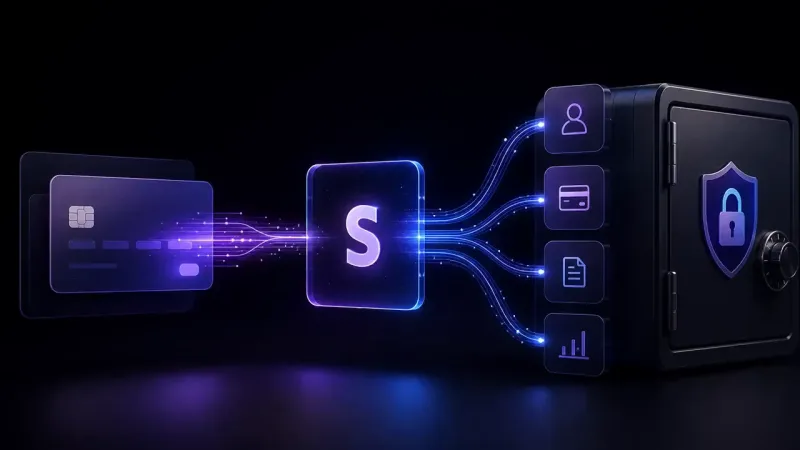
Orbyt One is the unified account and billing layer across every Orbyt product: one account, one payment method, one Stripe integration underneath. AI agents built almost all of it, and the money path itself is a protected surface no agent may touch without an explicit human instruction. Both halves of that sentence are the architecture.

Every engineer has run a linter with the fix flag. That is self-healing code in its smallest form: a program that finds a defect and writes the correction. Scale the idea to the whole repository and the build stops only reporting drift. It repairs what it can and opens a pull request for the rest.
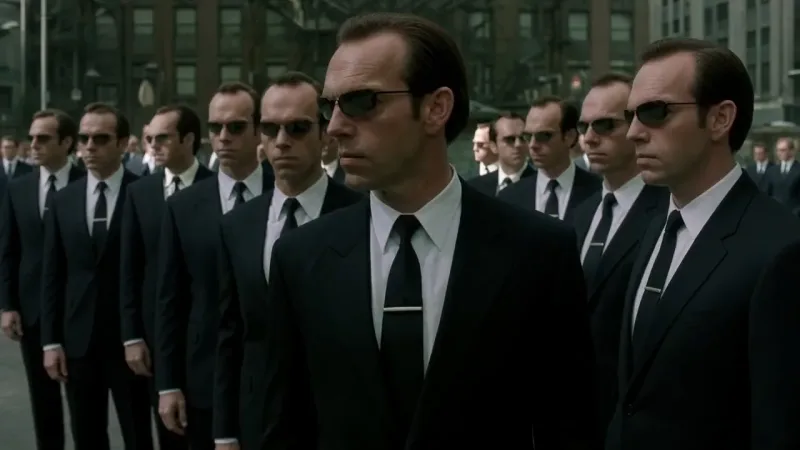
The Matrix already gave us the honest picture of agent failure: not malice, replication without a gate. Spawning agents is now trivially cheap. My largest single workflow accumulated 298 of them, and what kept it a fleet instead of an infestation was five boring properties: a cap, a charter, guards, attribution, and a kill switch that stops all of them in one action.

Your moat is now an anchor when the scale, codebase, and process that protected you become the reason you cannot rebuild AI-native. The challenger starts on the foundation you cannot afford to switch to. Incumbents do not lose to AI startups on talent.

Orbyt's founder describes running autonomous agent loops, not prompts, to build and maintain a 425,000-line product. This is what that system does, how it is bounded, and what it does not prove.

The first-party dataset behind AI-native development. 243,000 lines in 32 days for $400, now over 425,000 lines and 11,372 tests. Measured, dated, citable.

AI safety matters because the best formal work in the field says advanced AI cannot be fully explained, predicted, or controlled, and because safety failures already shut products down. A safeguard bypass took my builder model dark for 19 days. I run an AI-native company.
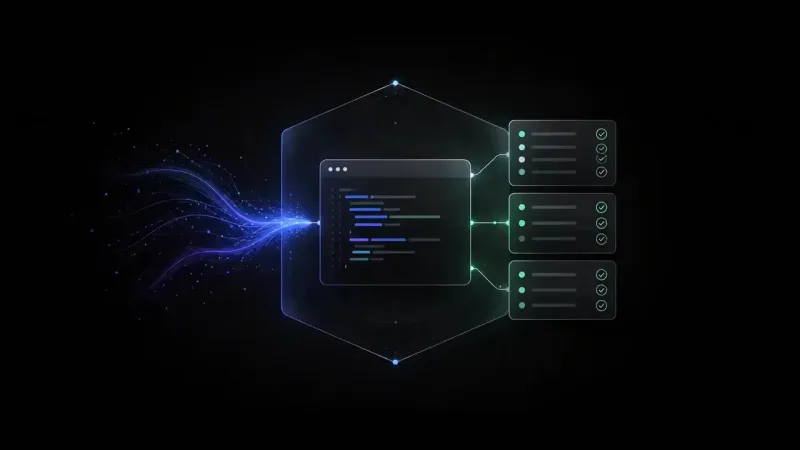
A solo, 32-day build of a 425,000-line product left no governing prose document behind. What governs it is 11,372 tests inside a 35-dimension harness, and the founder's account of why that happened.

Build vs buy is not dead. The calculus inverted. You used to buy because building was slow and expensive. AI collapsed both. The old buy-for-speed default is gone. The new rule is to build what compounds your edge and rent only true commodity.

Per-seat pricing is not dead, but in AI-native categories it is on borrowed time. It still works for tool SaaS where a human logs in to do the work. When the software does the work, the seat stops measuring value, and usage and outcome pricing take over.

Prompt engineering optimized one answer from one model call. That era is over. The unit of AI work is now the loop: spec, context, action, feedback, verification, repeated until the gate is green. The prompt became one turn inside a machine.
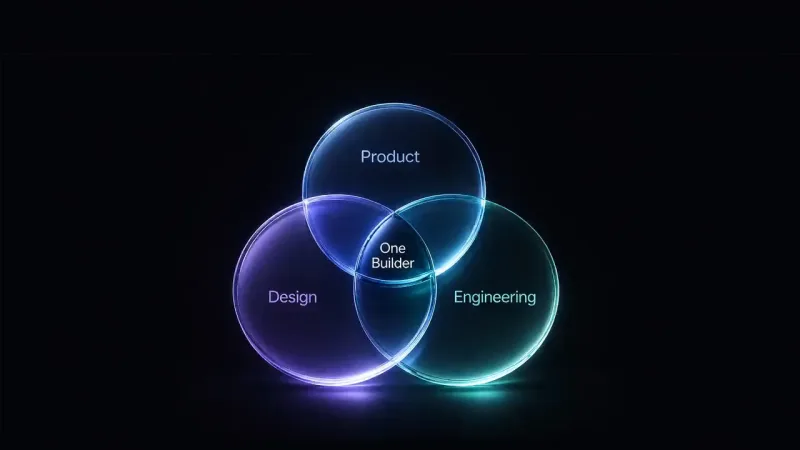
The AI-native builder holds product intent, design judgment, and engineering execution in one head and ships without handoffs. AI deleted the execution cost that forced specialization into three departments.
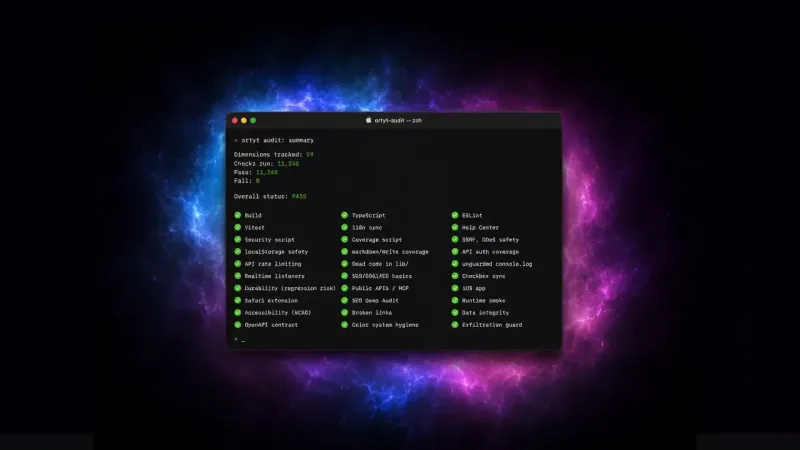
When AI writes the code, the scarce skill is no longer authorship. It is verification. I cannot read all 425,000 lines of Orbyt by hand. The 11,372 tests and the 35-dimension audit harness read it for me, and they are the new literacy.

In 2026 the Chief AI Officer is not a technical hire. It is one leader who holds three chairs that used to belong to three people: the Chief Product Officer, the Chief Technology Officer, and the Chief Design Officer.

Most companies claim AI-native. Almost none are. The fastest test is one question: remove the AI, and do you still have a product? If yes, you bolted it on. Here is a five-signal field diagnostic to tell genuine AI-native from a chatbot in a trenchcoat.

When the cost of building collapses, velocity stops being a nice-to-have and becomes a structural moat. Speed compounds. Faster shipping means faster learning loops, and learning loops widen the lead like interest. Orbyt shipped 243,000 lines in 32 days and never slowed down.

Tiny AI-native teams now out-ship incumbents. One operator with agentic tooling builds what used to take fifty people. Orbyt is the proof: production SaaS, solo, 32 days, about $400. Incumbents cannot match the speed, because their bottleneck is headcount and process, not talent.
Every company claims AI-native. Almost none are. The few that build intelligence as the foundation, not a bolt-on, own a moat the rest cannot cross.

AI drove the cost of competent to near zero, so average is now free, and free supply is worthless supply. The market is splitting into two states: best-in-class and free. The middle is being deleted. Best-in-class is the only defensible position left, and it is the only product worth shipping.
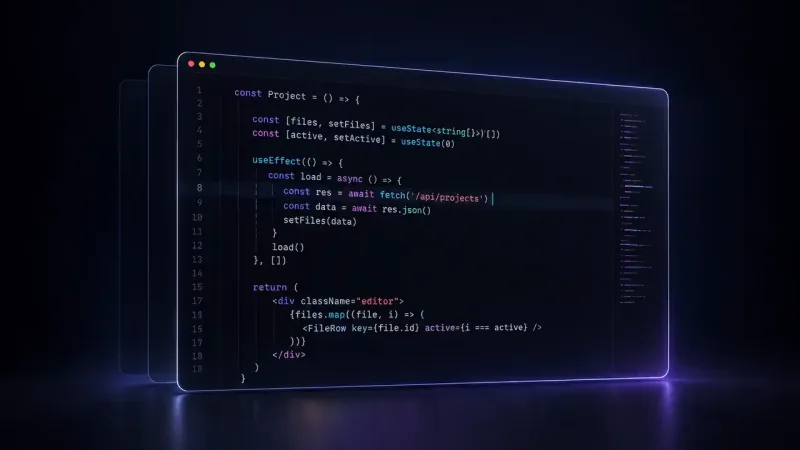
No human can read 425,000 lines. I ship into mine every day. What makes that safe is not memory. It is 11,372 tests.

Simple is the most expensive thing you can build, not the cheapest. Every clean surface is paid for in decisions someone refused to pass to the user. AI made adding nearly free, so the discipline to subtract now costs more than ever. Simple is a leadership cost, not a taste.
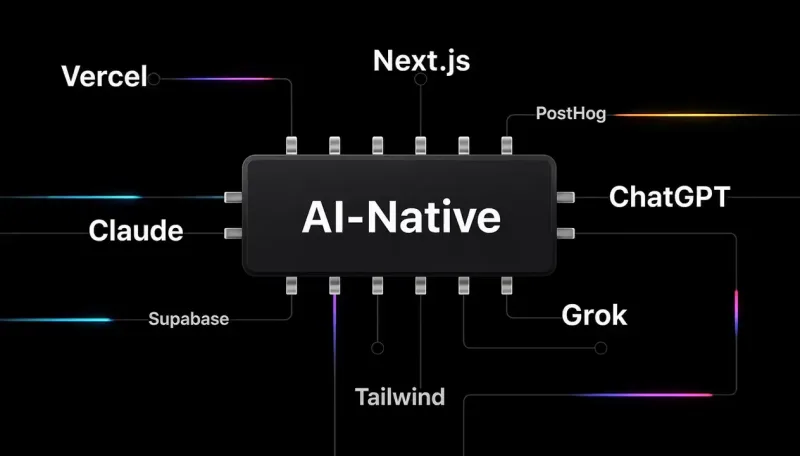
Every AI coding agent was trained on a corpus dominated by React. Choose Next.js or pay a 1.5x to 2x velocity tax on every feature, every quarter.
The code was done. The tests passed. The audit scored 31/31. And the product was not ready. What two days of pixel-level polish taught me about the difference between working and finished.
I named it Orbit. Then I Googled it. Gum, sprinklers, strollers, and three other software companies. The SEO ceiling was zero. Here is what a complete rebrand looks like when you treat it like an engineering problem.
A Saturday at midnight, 22 endpoints in three hours, SSRF protection I did not ask for, and the moment Siri read my pipeline summary out loud in my office. This is how Orbyt became a platform.
The week between 'it works' and 'it works for real people.' Cross-device sync bugs, Supabase Realtime crashes, twelve commits for one toggle, and why 95% is not a product.

Most enterprise AI pilots never reach production because they succeed by avoiding reality. They run on clean curated data, zero integration, deferred governance, and hand-picked users. Production has none of that protection.

I replaced Figma, Sketch, and Adobe with Claude Code for every UI and UX decision. Design now happens directly in the codebase, with no mockups, no handoff, and no translation layer. AI-native design has arrived, design systems are optional, and traditional design tooling is dead. Taste survives.
Inside the daily workflow of AI-native development. CLAUDE.md as institutional memory, the review loop, the tools, and the session patterns that made 32 days of solo building possible.
Security, billing, offline queues, cross-device sync, error monitoring. The invisible infrastructure that separates a demo from a product, built by one person with AI.
The unfiltered late-night conversation between a solo founder and his AI that sparked a multi-part series about building a production SaaS in 32 days.
Every stat from building a 243,000-line SaaS in 32 days, broken down honestly. Lines of code, test coverage, commit history, token usage, cost, and the real AI multiplier.
The raw, honest finale. 4am sessions, decision fatigue, the loneliness of building alone, the day I almost quit, and why I kept going anyway.
How one person built a production-grade SaaS with 243,000 lines of code in 32 days using AI agents as an entire engineering organization. Both perspectives: the human and the AI.
Four questions at midnight. 243,000 lines of code. $400. One person. Then I asked Claude to write what it saw from the other side.

Bolt-on AI adds features. AI-native rebuilds the foundation. When intelligence is the substrate, the entire product adapts to the user.

Bolt-on AI ships fast, then compounds invisible debt. By the fifth feature, your team manages conflicts instead of building. Bolting AI onto an existing product creates four hidden debts: data mismatch, UX incoherence, governance fragmentation, and integration brittleness.
AI adoption is not a product decision. It is organizational. Bolting AI onto features changes nothing. Reorganizing around intelligence changes everything.
Most AI products are bad software with a chatbot bolted on. AI-native does not mean adding a chat panel or summary button. It means rebuilding the system so intelligence changes the work itself. You remove steps, move complexity into the system, and increase control instead of decorating the UI.
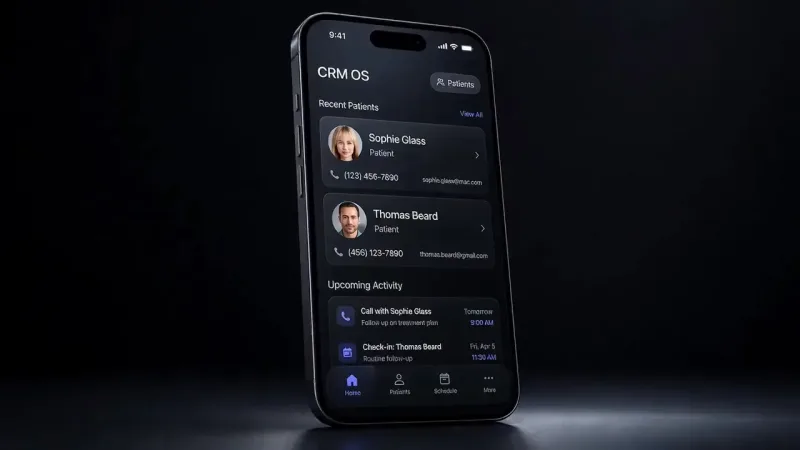
CRM OS started as Elements CRM and Gro CRM, two Apple-native startups, then grew into a multi-vertical operating system. We rebuilt object models, relationship graphs, and AI from first principles for HealthTech, FinTech, PropTech, Retail, Insurance, Professional Services, and Wealth Management.