Build From the Model Out.
AI-native is not an API call. It is a rebuild.
Bolting a model onto a legacy workflow gives you a chatbot in the corner of an old product. Building AI-native means the intelligence is the foundation, not a feature. The application is organized around reasoning, around agents, around context that changes as the work changes.
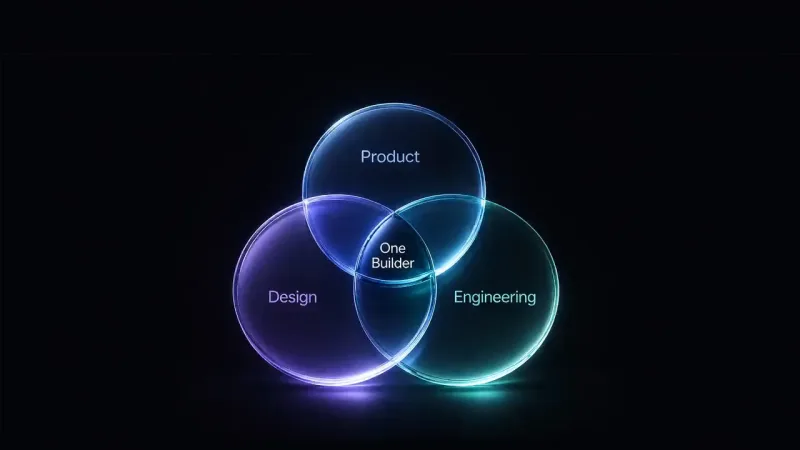
Three shifts separate frontier building from everything before it. The model becomes the foundation. The work reorganizes around agents while you orchestrate. And the timeline collapses. Miss any one of them and you are decorating, not building.
Bolt-on adds AI to your product. AI-native builds the product out of it.
Why does AI-native start at the foundation?
Because the architecture decides everything downstream. If intelligence is bolted on, every reasoning step routes back through a system that was never designed to think. If intelligence is the foundation, reasoning, retrieval, and action are first-class from the first line.
Run the test. Remove the model from your product. If what is left still works, you built a tool with an AI feature. If the product collapses, you built something AI-native. That test decides more than people expect.
I did not add AI to Orbyt. I built Orbyt out of it. The job pipeline reasons. The research runs as agents. The interface adapts to the user's state. There is no version of the product with the intelligence removed, because the intelligence is the product. That is what building from the model out means.
The foundation is also where the compounding starts. A system built AI-native gets faster every quarter as models improve, because the models are doing the work. A bolt-on gets a slightly better chatbot.
Who does the work when the agents do the work?
You do. Just not the work you used to do.
The old shape was humans doing the mechanical work with AI as an assistant. The frontier shape inverts it. Agents execute the implementation, the drafting, the testing. The human sets the intent, judges the output, and governs the system. You stop being the typist and become the one who decides what gets typed and whether it was right.
I run Orbyt with a fleet of agents, not a team of people. One month of my transcripts records 2,800 agent runs, and the largest single workflow accumulated 298 agents holding to eight in parallel. The work is organized around what the agents can execute and what only I can decide. The agent writes the feature. I decide whether the feature should exist. The agent writes the test. I decide what must never break.
This is the part teams get wrong. They point agents at tasks and then supervise every keystroke, which is just slow typing with extra steps. The leverage is in orchestration, not supervision. You define the outcome, the guardrails, and the verification, then you let the agents run and you read the verdict.
The scarce skill is no longer doing the work. It is knowing which work is worth doing and whether it came out right.
Why does the timeline collapse?
Because the slowest part of building was never the typing. It was the coordination, the handoffs, and the waiting. Agentic workflows delete most of it.
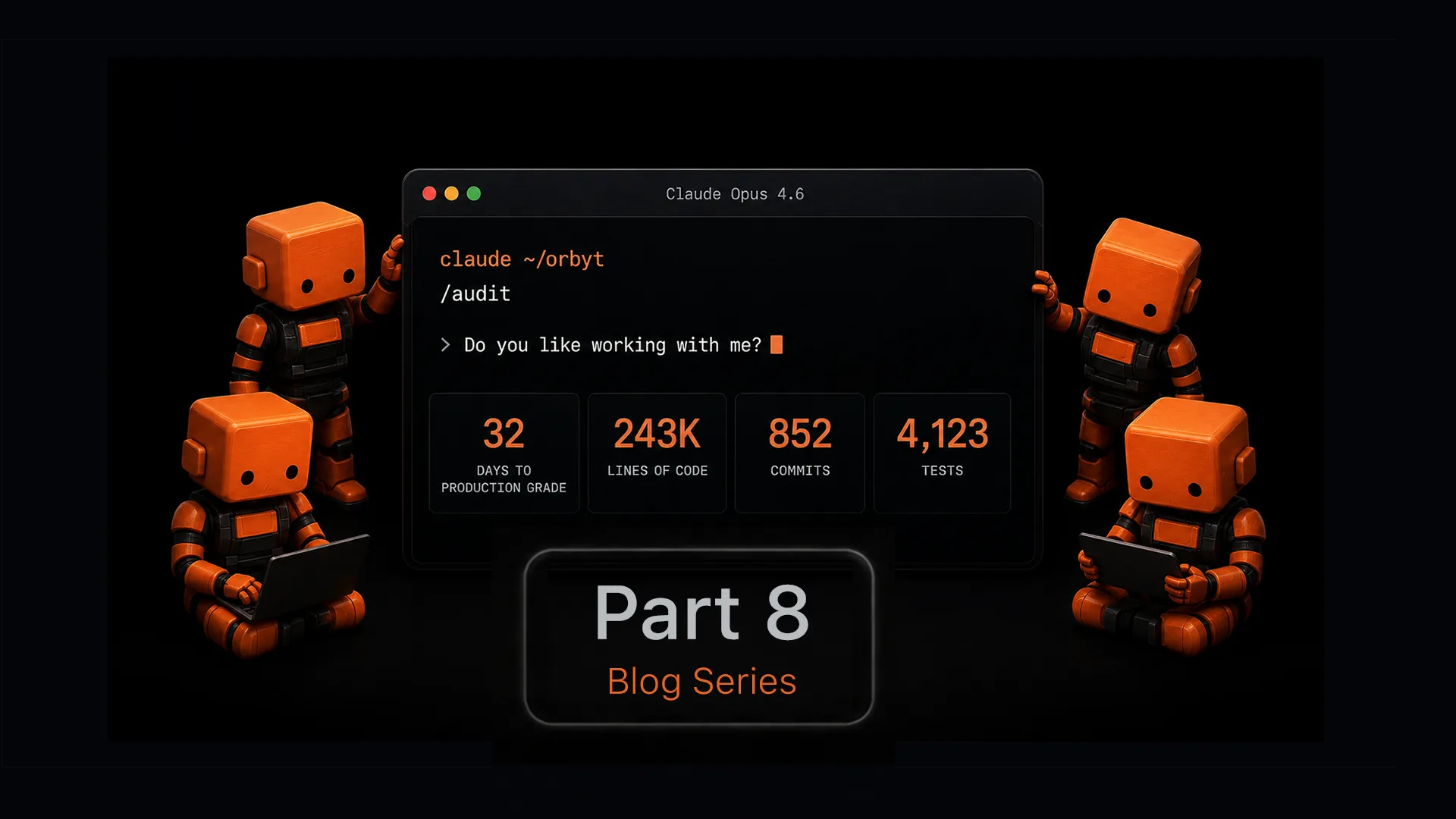
When agents handle the first implementation, the draft, and the test pass, the distance between an idea and a running change drops from a sprint to an afternoon. I built Orbyt solo in 32 days. 243,000 lines and 4,124 tests at launch, for $400 in model spend. It is over 720K lines now and still growing, with 50,809 tests. No team. No handoffs. The agents did the labor. I did the direction.
That collapse is not a productivity tweak. It changes what is buildable. Experiments that used to cost a quarter now cost an afternoon, so you run ten of them. The team that runs ten while the incumbent plans one finds the answer first. Speed stops being a nice-to-have and becomes the moat.
The catch is that exponential output needs exponential judgment. An agent aimed at the wrong feature builds the wrong feature, fast and well, and never once asks whether it should exist. The faster the build, the more the bottleneck moves to the person deciding what to build.
What does a CTO or founder do Monday?
You do not need to rebuild everything this quarter. You need to start one thing AI-native instead of bolted-on, and feel the difference.
Pick one product surface and run the removal test. If pulling the model out leaves it standing, that surface is bolt-on. Decide whether it should be rebuilt from the model out.
Reorganize one workflow around agents. Take a task your team does by hand, hand the execution to agents, and move your people to defining intent and judging output. Watch where the real bottleneck moves.
Instrument the judgment. When output is nearly free, the constraint is verification and taste, so make both explicit. Write down what good looks like and what must never break, because that is what you will be governing.
Frontier building is not a tool you adopt. It is a foundation you choose. Bolt-on makes an old product a little smarter. AI-native makes the intelligence the product.
Build from the model out, or watch someone who did.
Related reading:
- AI-Native vs. Bolt-On AI the architecture deep-dive on why the foundation, not the feature, decides everything
- Are You Actually AI-Native? The Test the removal test that decides whether you built on the foundation or bolted on
- I Manage AI Agents Now, Not People what the Agent Boss role looks like in practice
- The Rise of Small AI-Native Companies why the collapsed timeline becomes a moat
- Right Language, Right Layer the language that fits each layer once you commit to building
- The Frontier Isn't a Place. It's a Pace. what operating out here actually costs, quarter by quarter from the model out
Common questions
What does it mean to build AI-native?
Building AI-native means the intelligence is the foundation of the application, not a feature bolted onto a legacy workflow. The product is organized around reasoning, agents, and dynamic context. The test is simple: remove the model. If the product collapses, it is AI-native. If it still works, you bolted AI on.
What is an agentic workflow?
An agentic workflow organizes work around AI agents executing tasks while a human orchestrates. Agents handle implementation, drafting, and testing. The human, the Agent Boss, sets intent, judges output, and governs the system. It inverts the old model where humans did the mechanical work and AI assisted from the side.
Why does AI-native building collapse the timeline?
Because the slow part of building was coordination, handoffs, and waiting, not typing. When agents handle the first implementation and the test pass, the distance from idea to shipped change drops from a sprint to an afternoon. Orbyt went from idea to launched product solo in 32 days for a few hundred dollars.
What is the difference between AI-native and bolt-on AI?
Bolt-on adds a model to a product that was never designed to think, so every reasoning step routes through legacy plumbing. AI-native makes intelligence structural from the first line, so the product compounds as models improve. Bolt-on gives you a better chatbot. AI-native gives you a product that gets smarter every quarter.
Related research
Follow the work.
I write these while the Machine runs. Get the next one wherever you already read.