Described More Than Seen.
Correction, 2026-11-05. This post gave my probe's zero as a starting line, which reads as a count of who cites me. The probe counts whether one model's answers name Orbyt and, in its last two runs, whether a returned source is an Orbyt page. My Bing Webmaster Tools AI Performance report for orbytlabs.ai, which lists its citation sources as Microsoft Copilots and Partners, showed 32.9K citations from Aug 25 to Nov 3, 2026.
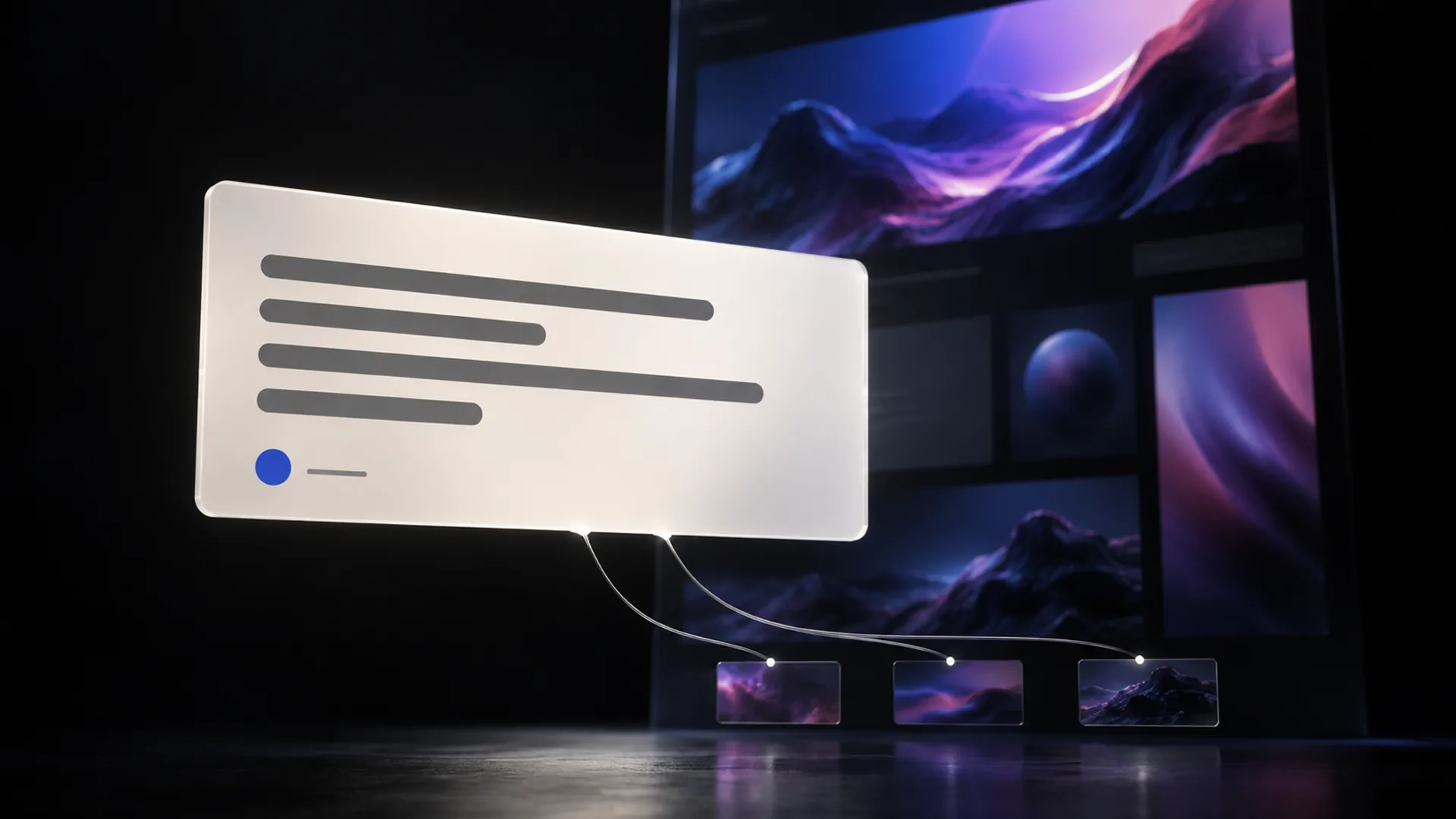
Your brand is now described more often than it is seen. When an engine answers a buyer's question about your product, everything you commissioned, the typography, the motion, the photography, is absent. What remains is a description assembled by a machine from the words and facts it could find. That description is a brand encounter, and almost nobody designs it.
I design mine. Here is the discipline.
Where did the brand encounter move?
Off your property, into the answer.
For a century the brand encounter happened on surfaces you controlled: the package, the storefront, the site. Then it moved to surfaces you rented: the search result, the feed. Now it is moving to a surface you neither own nor rent, the AI answer, where your company appears as a few sentences you did not write, served at the exact moment of intent.
The arithmetic is the same one I laid out for citations: the journey compresses into one surface, and presence on that surface decides everything. For brand, the compression is harsher. A search result at least showed your title tag. An answer paraphrases you.
The most frequent version of your brand is now written by a machine, from your receipts, without your art direction.
What does a machine-made description contain?
Only what the machine could verify, which is why it can be engineered.
An engine assembling a description reaches for facts it trusts: what you do, what you cost, who you serve, what you are the source for. It cannot use your color system. It can use your numbers, your entity records, and what other people say about you. That shortens the brand toolkit to four materials, all of them unglamorous.
Consistent figures. An engine that meets two versions of the same number trusts neither. Every citable figure on my site lives in one tested source of truth, and the build fails when any surface drifts, because the data layer is what holds the prose up.
A resolvable identity. The description needs a who. Mine resolves through Wikidata (opens in a new tab) and ORCID 0009-0005-2615-3624, registries I do not control, and the Orbyt Intelligence compensation dataset, 15 million data points across 3,445 roles and 81 cities, is deposited under DOI 10.5281/zenodo.19653006 (opens in a new tab) so a machine can trace the figures to their origin.
Owned vocabulary. The terms you genuinely define, in words your writing already supports, become the language the description borrows.
Mentions. Brand mentions correlate with AI visibility roughly three times more strongly than backlinks. The description is built partly from other people's sentences, which puts the biggest brand lever off-site, where it always secretly was.
What happens to visual design?
It concentrates. This is the part my design career will not let me soften.
The fraction of buyers who click through arrive already framed: the description told them what you are before your page loaded. Your visual brand now has one job in that moment, confirm or contradict, and a site that contradicts its own description spends the trust the answer lent it. Design stops being the whole first impression and becomes the proof layer behind it, which raises the stakes on craft. Design was always the fastest way to build trust; now it is the second impression, and second impressions carry the burden of proof.
So the brand system gains a surface. Alongside the logo, the type, and the palette sits the description: the 60 words a machine should say about you, engineered with the same intent as any of the others, and tested the same way, by asking the engines and counting. My own probe of one model found no answer naming Orbyt on Sep 18, 2026. My Bing Webmaster Tools AI Performance report for orbytlabs.ai, which lists its citation sources as Microsoft Copilots and Partners, showed 32.9K citations from Aug 25 to Nov 3, 2026. Two instruments, two scopes, and that is what you learn when you measure instead of assume.
What to do Next
Run the description audit. Ask the major engines what your company does, what it costs, and who it is for. Twenty minutes, one document, and most executives have never seen this version of their brand.
Trace every error to its source. A wrong figure means two of your surfaces disagree. A vague sentence means the claim was never made liftable. The gap list is the brand roadmap, and it is mostly a data project wearing brand language.
Then write the description you want, 60 words, and make every surface support it: the figures consistent, the identity resolvable, the vocabulary yours, the mentions earned. You cannot art-direct the answer. You can decide what it has to work with.
Related reading:
- Citations. Citations. Citations. the market logic behind the moved encounter
- Built to Be Quoted. the site engineering that feeds the description
- Prose Is Paint. Data Is Load-Bearing. the data layer under the brand
- Design Is the Fastest Way to Build Trust the proof layer, when they do click through
- AEO: No One Has the Answer Key the metaphor everyone reaches for when metrics run dry
Common questions
What does it mean that brands are described more than seen?
An AI answer describing your product to a buyer is a brand encounter with none of your visual identity in it: no typography, no color, no motion. As more buying journeys start and end inside answers, the words and facts a machine can find become the most frequent version of your brand, and most companies have never designed that version.
How do you influence how AI describes your brand?
Feed the machine a description worth repeating. Keep every figure consistent across every surface, because an engine that meets two versions of the same number trusts neither. Resolve your identity through registries you do not control. Define the terms you genuinely own. Then earn mentions, since brand mentions correlate with AI visibility roughly three times more strongly than backlinks.
Does visual design still matter in the answer economy?
More, not less, because it concentrates. The fraction of buyers who click through arrive already framed by the description, and the visual brand has one moment to confirm or contradict it. Design stops being the whole first impression and becomes the proof layer behind it, which raises the stakes on craft rather than lowering them.
How do you audit the AI-described version of your brand?
Ask the major engines what your company does, what it costs, and who it is for, then compare the answers against what you wish they said. Every wrong figure traces to an inconsistent surface you control, and every vague sentence traces to a claim you never made liftable. The gap list is the brand roadmap.
Follow the work.
I write these while the Machine runs. Get the next one wherever you already read.