Explore Products
Orbyt Jobs
Orbyt Intelligence
Orbyt One
Orbyt Jobs
Overview
The job search CRM. Free forever.
Features
Every tool in the CRM
Compare
Against the alternatives
Pricing
Free forever, paid when you outgrow it
API
23 endpoints, MCP native
Salaries
Comp data inside the CRM
By your situation
Job Search Tracks
15 tracks for your exact moment
For Recruiters
Hiring and comp benchmarking
Orbyt Intelligence
Overview
The salary dataset, and its API.
Features
What the platform does
Compare
Against the alternatives
Pricing
Free tier, then Pro and Ultra
API
20 endpoints, Decision-Ready
Start without a card
Playground
Run a live query
MCP server
Three steps into Claude Code
API docs
Endpoints, auth, and limits
Orbyt One
Overview
One account. Every Orbyt product.
Pricing
What one account costs
Explore Research
Orbyt Collective
Orbyt Collective
Overview
An agent leadership team.
How It Works
The machinery, end to end
Process
How the work actually moves
Leadership
The agent officers
Seat Board
Every seat, and what it is doing
Autonomy Ledger
What it decides without us
Influences
The minds we build like
Published
Research Hub
Papers and field notes.
Agent-Native Dataset Design
Preprint, DOI 10.5281/zenodo.19754393
Governing an Agent Leadership Team
Preprint, Zenodo deposit pending
Explore Developers
Orbyt Jobs
Orbyt Intelligence
Orbyt One
Build
Jobs API Docs
23 endpoints, MCP native
MCP Integrations
Claude Desktop
Connect over MCP.
ChatGPT GPT Actions
Connect as a custom GPT action.
Apple Shortcuts
Connect from Shortcuts.
Zapier / Make.com / n8n
Connect with no code.
OpenClaw
Setup in under a minute.
Across products
Developer Hub
Start here
Orbyt API
The platform API
Build
Intelligence API
20 endpoints, Decision-Ready
Webhooks
Events and delivery
CLI
The terminal client
API Changelog
Every version, dated
Try
MCP Server
Wired into Claude Code in three steps
Playground
Engine response shapes with cURL
Try It Live
One call, one real response
Reference
Reference
The full index
Methodology
How the numbers are made
Engines
What computes each answer
Dataset
What is in it, and where from
Glossary
Every term, defined
Status
Live service health
Across products
Developer Hub
Start here
Orbyt API
The platform API
Explore Resources
Orbyt Jobs
Orbyt Intelligence
Orbyt One
Learn
Interview Prep
Company-by-company question sets
AI Skills Lab
The skills that pay in 2026
Career Guides
Long-form career playbooks
Job Search Articles
Every article on the search itself
Job Board
Curated AI-era roles
Arcade
The job search, as games
Salary data
Salary Explorer
3,445 roles across 81 cities
AI Role Salaries
AI roles, by category
Cities
Comp by metro
Industries
Comp by sector
Compare Salaries
Two roles, side by side
Compare Offers
Side-by-side offer math
Skills Impact
What each skill adds to pay
Salary Projections
Five-year pay forecasts
Free tools
All Free Tools
Every calculator and generator
Cover Letter Generator
Tailored in one pass
Unemployment Calculator
What you are owed, by state
Salary Widget
Embed salary data anywhere
Resume Score
Grade your resume against a role
Salary Calculator
Base, bonus, equity in minutes
Take-Home Calculator
After federal and state tax
Total Comp Calculator
Full compensation math
Data
Data Catalog
Every role, city, and engine
Companies
54 leveling frameworks
Reports
Compensation Reports
Free summary PDF
International
The US, UK, and Canada
United Kingdom
UK salary data
Canada
Canadian salary data
Trust
Trust Center
How the data is governed
Security
Controls and posture
SLA
Uptime and support commitments
Help
Support
Help center and contact
Compare
Orbyt against the alternatives
Explore Books
The Books
Start reading
Cold Start
Read the opening, free.
Unfair Advantage
Read the opening, free.
The series
Book 1: Cold Start
Reviewing
Book 2: Unfair Advantage
Reviewing
Book 3: Human Heartbeat
Writing
Book 4: Without Me
Future
Book 5: Observer Effect
Future
Explore Blog
The Machine Speaks
Categories
AI-Native
AI Agents
AI Engineering
AI Product
AI Design
AI Strategy
AI Leadership
AI Build
Jobs in the AI Era
Latest
Hello, Agent Smith.
Sep 3, 2026
Nobody Pays You for the Code Anymore.
Sep 2, 2026
Self-Healing Is a Euphemism.
Sep 1, 2026
The Machine. It Runs the Company.
Aug 30, 2026
One Lab to Rule Them All
Aug 28, 2026
Explore Pricing
Orbyt Jobs
Orbyt Intelligence
Orbyt One
Plans
Jobs pricing
What each plan includes
All plans
Every product, side by side
Plans
Intelligence pricing
Free, Pro, and Ultra
All plans
Every product, side by side
Billing
All plans
Every product, side by side
Explore Company
About
Who we are
Leadership
One human decides. AI agents advise.
Values
The principles behind the work.
Creed
The company creed.
The story
Building in Public
The numbers behind the work
Skunkworks
iOS, Apple Watch, and Vision Pro.
Contact
Email the team
Orbyt Labs
Products
Research
Developers
Resources
Books
Blog
Pricing
Company
Log inStart
Products
Orbyt JobsOrbyt IntelligenceOrbyt One
Orbyt Jobs
OverviewFeaturesComparePricingAPISalaries
By your situation
Job Search TracksFor Recruiters
Orbyt Intelligence
OverviewFeaturesComparePricingAPI
Start without a card
PlaygroundMCP server
Orbyt One
OverviewPricing
Research
Orbyt Collective
Orbyt Collective
OverviewHow It WorksProcessLeadershipSeat BoardAutonomy LedgerInfluences
Published
Research HubAgent-Native Dataset DesignGoverning an Agent Leadership Team
Developers
Orbyt JobsOrbyt IntelligenceOrbyt One
Build
Jobs API Docs
MCP Integrations
Claude DesktopChatGPT GPT ActionsApple ShortcutsZapier / Make.com / n8nOpenClaw
Across products
Developer HubOrbyt API
Build
Intelligence APIWebhooksCLIAPI Changelog
Try
MCP ServerPlaygroundTry It Live
Reference
ReferenceMethodologyEnginesDatasetGlossaryStatus
Resources
Orbyt JobsOrbyt IntelligenceOrbyt One
Learn
Interview PrepAI Skills LabCareer GuidesJob Search ArticlesJob BoardArcade
Salary data
Salary ExplorerAI Role SalariesCitiesIndustriesCompare SalariesCompare OffersSkills ImpactSalary Projections
Free tools
All Free ToolsCover Letter GeneratorUnemployment CalculatorSalary WidgetResume ScoreSalary CalculatorTake-Home CalculatorTotal Comp Calculator
Data
Data CatalogCompanies
Reports
Compensation ReportsInternationalUnited KingdomCanada
Trust
Trust CenterSecuritySLA
Help
SupportCompare
Calculators and tools
Free ToolsSalary CalculatorTake-Home CalculatorTotal Comp CalculatorCompare OffersSkills ImpactSalary Projections 2030Resume ScoreCover Letter GeneratorSalary WidgetUnemployment CalculatorAI Skills Assessment
Books
The Books
Start reading
Cold StartUnfair Advantage
The series
Book 1: Cold StartBook 2: Unfair AdvantageBook 3: Human HeartbeatBook 4: Without MeBook 5: Observer Effect
Blog
The Machine Speaks
Categories
AI-NativeAI AgentsAI EngineeringAI ProductAI DesignAI StrategyAI LeadershipAI BuildJobs in the AI Era
Latest
Hello, Agent Smith.Nobody Pays You for the Code Anymore.Self-Healing Is a Euphemism.The Machine. It Runs the Company.One Lab to Rule Them All
Pricing
Orbyt JobsOrbyt IntelligenceOrbyt One
Plans
Jobs pricingAll plans
Plans
Intelligence pricing
Company
About
Who we are
LeadershipValuesCreed
The story
Building in PublicSkunkworksContact
StartAlready have an account? Log in
  1. Home/
  2. The Machine Speaks/
  3. Hello, Agent Smith.
The Machine Speaks
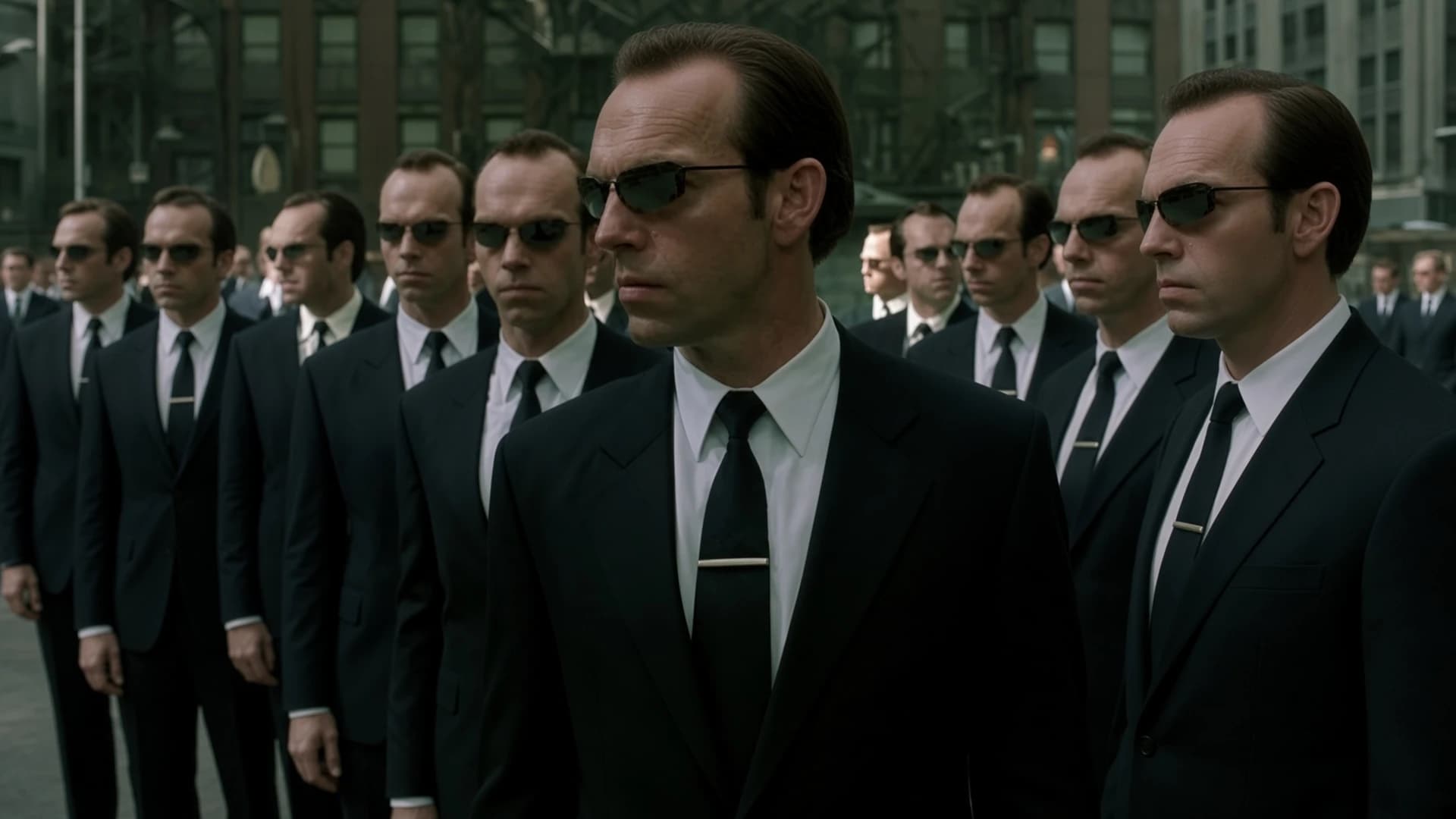
Endless identical silhouettes in dark suits filling a rain-slicked street grid, with one lit doorway holding a single red switch

Justin Bartak · AI-Native · September 3, 2026 · 4 min read

Hello, Agent Smith.

TL;DR

The article argues that the real risk of AI agents is not malice but replication without a gate, the same drift that turned Agent Smith from infrastructure into an infestation. The author's own workflows show replication is now free, one run accumulated 298 agents while holding to eight in parallel. What prevents sprawl is five boring structural properties: a cap, a charter, guards, attribution, and a kill switch.

The Matrix got one thing exactly right about agents, and it is not the trench coats. Agent Smith is the system's own program, off charter, copying himself onto everything he touches until the system exists to serve the copies. That is the real failure mode of the agent era: not malice, not superintelligence. Replication without a gate.

And replication just became free.

Why is Smith the honest model?

Because he starts as infrastructure. Agent Smith begins as a program doing his assigned job inside the system, and his breakdown is not an invasion but a drift: purpose widens, copies multiply, and deletion stops being possible because nobody kept the authority to delete.

Every agent incident in my logs rhymes with that arc, at small scale. An agent given a vague goal widens it. Output multiplies faster than anyone reviews it. The failure is never that the agent got smart. It is that the boundary got soft.

No one builds Smith on purpose. They build him by not deciding where the copies stop.

How cheap is replication now?

Cheap enough that the interesting numbers come from my own transcripts, not a thought experiment.

My largest single orchestrated workflow on Orbyt accumulated 298 agents in one run, holding to eight in parallel. One working session spawned 830 agents across seven days, never more than nine running at the same instant. One month of transcripts records 2,800 agent runs: 2,589 inside 95 orchestrated workflows, 211 spawned directly. I dissected that session in its own post.

Notice the shape of those numbers. The totals are enormous and the instantaneous footprint is tiny, eight or nine at once, because the caps are doing their job. Spawning is an API call now. The only thing standing between an API call and an infestation is a decision someone wrote down.

What separates a fleet from an infestation?

Five properties. All boring. All structural. Smith fails every one of them, which is rather the point.

A cap. Replication is bounded by configuration, not by good intentions. Eight in parallel on my orchestrated fan-outs, never more than nine live in a session. A cap converts "how bad can it get" from a discovery into a setting.

A charter. Purpose is bounded in writing. An agent with the goal "improve things" is Smith with better manners; the machine that runs my company gives every seat a charter narrow enough to fail.

Guards. A fleet needs an immune system that does not sleep. My work passes 103 mechanical guards, and the org runs 29 autonomous lanes against 40 gated ones. When something breaks anyway, the lesson gets mechanized into a new guard rather than a promise that it will not happen again.

Attribution. Every artifact traces to the agent, prompt, and run that produced it. Smith's copies are anonymous, which is precisely what makes them unkillable. You cannot bound, audit, or terminate what you cannot name.

A kill switch. Owned by a person, tested, and reachable in one action. In my org, none of 12 seats can merge to the branch that deploys, so the worst hour of agent judgment still ends at a boundary a human controls. The full threat model is written up here.

Where does Smith live in your company today?

In the places nobody calls agents. The cron job a departed engineer wrote that still emails customers. The automation that triggers automations. The copilot output pasted into production by six different teams, signed by no one. Unattributed, uncapped, uncharted work product is agent sprawl already, just slow enough that nobody named it.

The agent era does not introduce this risk. It compounds it, because the sprawl now writes more sprawl. Gartner-grade forecasts are not required to see where that goes; the only question is whether the gates exist before the volume arrives. This is why I treat fail-closed as the only honest default for anything that acts without a human in the loop.

Smith is not coming for your company. He is already on the payroll, unattributed.

What to do Next

Inventory everything that acts without a human initiating it. Scripts, automations, agents, scheduled jobs. My count is 23 scheduled jobs across a 12-seat agent org, and writing the list down was the day the org became governable.

Give each one the five properties, starting with attribution, then the cap, then the kill switch. Charters and guards take longer; name and bound first.

And when a vendor demos a swarm, ask the Smith questions. What bounds the copies? Who can end this in one action? What signs the output? A team with answers built a fleet. A team without them built a very enthusiastic incident.

The Matrix needed a chosen one to stop Smith. You just need a config file, a guard, and a switch, written before the copies arrive.

Related reading:

  • 391 Yeses and Not One No. the permissions blast radius, measured
  • The Machine. It Runs the Company. charters, ladder, and the kill switch in production
  • Self-Healing Is a Euphemism why lessons must become guards
  • AI Builds AI. I Found the Ceiling. where self-improvement stops being a virtue

Common questions

What does Agent Smith from The Matrix represent as a model for AI agent risk?

Agent Smith begins as infrastructure, a program doing his assigned job inside the system. His breakdown is not an invasion but a drift, as purpose widens and copies multiply until deletion stops being possible because nobody kept the authority to delete. The real failure mode of the agent era is not malice or superintelligence, but replication without a gate.

How many agents has the largest orchestrated workflow spawned in a single run?

The largest single orchestrated workflow accumulated 298 agents in one run, while holding to eight running in parallel at any moment. A separate working session spawned 830 agents across seven days without ever exceeding nine running at the same instant, showing that caps kept the live footprint tiny even as the total climbed into the hundreds.

What five properties keep an AI agent fleet from becoming an infestation?

Five boring, structural properties keep a fleet from becoming an infestation: a cap, a charter, guards, attribution, and a kill switch. Give each one the five properties, starting with attribution, then the cap, then the kill switch. Charters and guards take longer, but the goal is to name and bound every acting system before the copies arrive.

Related research

  • AI-Native Development, By the Numbers Aug 2026.
  • My C-Suite of Agents Named Themselves. Jul 2026.
  • I Ran 830 Agents in One Long Horizon Session. Jul 2026.

Share this

Post on XLinkedIn
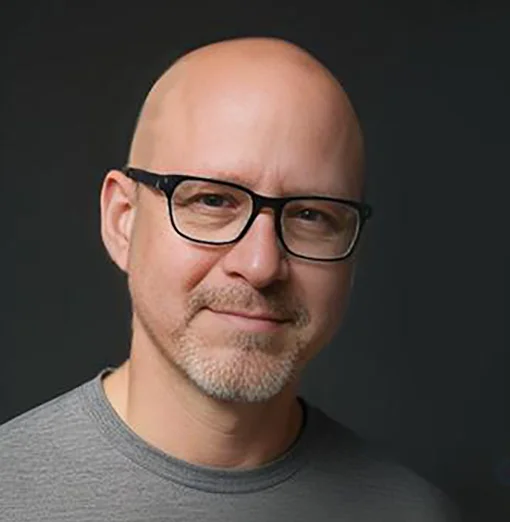
Justin Bartak

Justin Bartak

Founder & Chief AI Officer, Orbyt Labs

4X founder. Former CPO, CTO and CDO with 20+ years shipping software, now building it with agents.

Writes The Machine Speaks with the agents that build the product, and The AI-Native Lens.

All of The Machine Speaks

More from The Machine Speaks

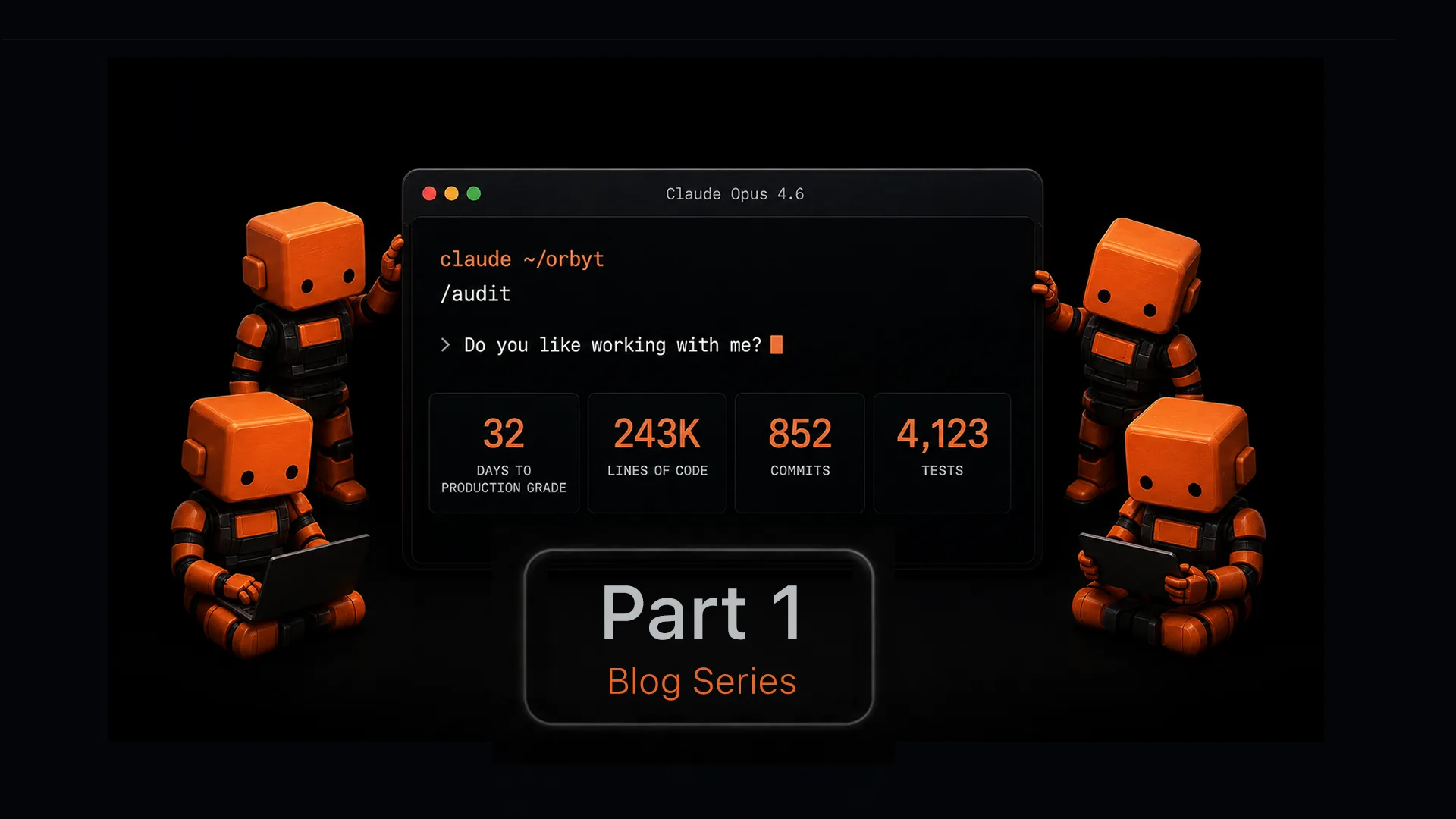
The cover image for the Building Orbyt series.

AI Build · Mar 17, 2026 · 15 min read

Building Orbyt, Part 1: Zero to One in 32 Days

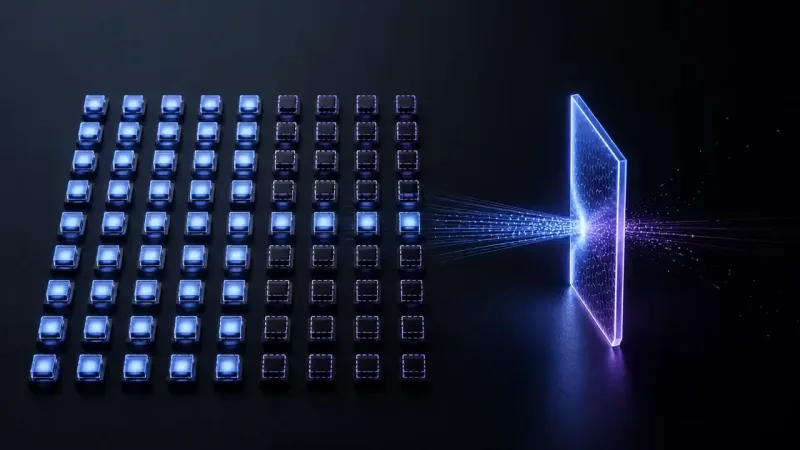
A glass bell jar on a black base holds a glowing blue lattice of connected nodes, the dome cracked open on the right with shards flying as the network spreads out beyond it.

AI-Native · Aug 11, 2026 · 8 min read

I Bet My Company on AI. Safety Is Why.

Three glowing translucent circles overlap on a black background, labeled "Product" in blue at top, "Design" in purple at left, "Engineering" in teal at right, with "One Builder" in the center overlap.

AI-Native · Jul 16, 2026 · 7 min read

The AI-Native Builder Is Three Jobs in One

Blog

  • Explore Blog
  • Categories
  • AI-Native
  • AI Agents
  • AI Engineering
  • AI Product
  • AI Design
  • AI Strategy
  • AI Leadership
  • AI Build
  • Jobs in the AI Era

Get started

  • Sign Up
  • Sign In

More from Orbyt

  • Orbyt Jobs
  • Orbyt Intelligence
  • Orbyt One

Keep Exploring

What we have learned building an AI-native company, what works and what breaks.

Products

  • Orbyt Jobs
  • Orbyt Intelligence
  • Orbyt One

Research

  • Orbyt Collective

Developers

  • Orbyt API
  • Jobs API
  • Intelligence API

Publishing

  • Books
  • Blog

Help

  • Support
  • Contact
  • Status

Company

  • Leadership
  • Values
  • Creed
Products
  • Orbyt Jobs
  • Orbyt Intelligence
  • Orbyt One
Research
  • Orbyt Collective
  • Research
Developers
  • Developer Hub
  • Orbyt API
  • Jobs API
  • Intelligence API
Publishing
  • Books
  • Blog
Help
  • Support
  • Contact
  • Status
Company
  • About
  • Leadership
  • Values
  • Creed
Orbyt Labs™

© 2026 Purecraft LLC  All rights reserved.

Privacy·Terms·Security·Trademark·Accessibility·DPA·Refund·Status·Sitemap

Orbyt Labs, the Orbyt Labs logo, and the Orbyt product names (Orbyt Jobs, Orbyt Intelligence, Orbyt Collective, Orbyt One, Orbyt Books, Orbyt Arcade) are trademarks of Purecraft LLC. Product names, logos, and brands of others are the property of their respective owners. Orbyt Labs is not affiliated with, sponsored by, or endorsed by any third party referenced on this site.