Orbyt Labs
Products
Products
Orbyt Jobs
The job search CRM. Free forever.
Orbyt Intelligence
AI compensation data, and the API behind it.
Orbyt One
One account. Every Orbyt product.
Research lab
Orbyt CollectiveAn agent leadership team, an audit harness, and governance layer
The skunkworks
Orbyt Skunkworks
The agent org, iOS, Apple Watch, Vision Pro
By your situation
Job Search Tracks
15 tracks for your exact moment
For Recruiters
Hiring and comp benchmarking
Start without a card
Playground
Run a live query
MCP server
Three steps into Claude Code
API docs
Endpoints, auth, and limits
What one account means
One login for Jobs and Intelligence.
One bill, one payment method.
One profile that follows you.
Developers
Build
Developer Hub
Start here
Orbyt API
The platform API
Jobs API Docs
23 endpoints, MCP native
Intelligence API
20 endpoints, Decision-Ready
Try
MCP Server
Wired into Claude Code in three steps
Playground
Engine response shapes with cURL
Try It Live
One call, one real response
Webhooks
Events and delivery
Reference
Reference
The full index
Glossary
Every term, defined
Methodology
How the numbers are made
Status
Live service health
Resources
Learn
Interview Prep
Company-by-company question sets
AI Skills Lab
The skills that pay in 2026
Guides
Long-form career playbooks
Tools and data
Free Tools
Calculators and generators, no signup
Salary Explorer
3,445 roles across 81 cities
Job Board
Curated AI-era roles
Compensation Reports
Free summary PDF
Data Catalog
Every role, city, and engine
Companies
54 leveling frameworks
International
The US, UK, and Canada
Help
Support
Help center and contact
Compare
Orbyt against the alternatives
Books
Start reading
The books
The story in order
Read the opening
Free, no email required
The series
Book 1: Cold Start
Available now
Book 2: Unfair Advantage
Writing
Book 3: Human Heartbeat
Coming
Book 4: Without Me
Future
Book 5: Observer Effect
Future
Receipts
Building in Public
The numbers behind the books
BlogPricing
Company
Who we are
About
A family of AI products, and why they exist
Leadership
One human decides. AI agents advise.
Values
The principles behind every build decision
Creed
Here is to the relentless ones. The company creed
The story
Skunkworks
The agent org. iOS, Apple Watch, Vision Pro.
Contact
Email the team
Log inStart
BlogPricing
Products
Orbyt JobsOrbyt IntelligenceOrbyt One
Research lab
Orbyt Collective
The skunkworks
Orbyt Skunkworks
Developers
Build
Developer HubOrbyt APIJobs API DocsIntelligence API
Try
MCP ServerPlaygroundTry It LiveWebhooks
Reference
ReferenceGlossaryMethodologyStatus
Resources
Learn
Interview PrepAI Skills LabGuides
Tools and data
Free ToolsSalary ExplorerJob BoardCompensation ReportsData CatalogCompaniesInternational
Help
SupportCompare
Calculators and tools
Free ToolsSalary CalculatorTake-Home CalculatorTotal Comp CalculatorCompare OffersSkills ImpactSalary Projections 2030Resume ScoreCover Letter GeneratorSalary WidgetUnemployment CalculatorAI Skills Assessment
Books
Start reading
The booksRead the opening
The series
Book 1: Cold StartBook 2: Unfair AdvantageBook 3: Human HeartbeatBook 4: Without MeBook 5: Observer Effect
Receipts
Building in Public
Company
Who we are
AboutLeadershipValuesCreed
The story
SkunkworksContact
StartAlready have an account? Log in
  1. Home/
  2. Blog/
  3. The Best AI Products Go Unnoticed
Ground Control
Close crop of a man with a thick moustache, round clear framed glasses and a small white earpiece, smiling faintly as he gazes past a blurred window in a red and blue checked shirt.

Justin Bartak · AI Product · February 19, 2026 · 5 min read

The Best AI Products Go Unnoticed

TL;DR

The best AI products disappear. No chatbot, no "powered by AI" badge, no prompt box. They make the decisions a user would have made, at the moment they would have made them, without asking. The intelligence lives in what does not happen. Calm software wins because it reduces cognitive load instead of adding it.

In Spike Jonze's Her, Theodore falls in love with an AI he never sees. There is no screen. No interface. No dashboard. Samantha is just a voice, perfectly timed, always present, never intrusive. She anticipates what he needs before he asks. She fills the silence without crowding it.

It is the most honest depiction of what great AI should feel like. Not a tool you operate. An intelligence you forget is there. The best AI products are the ones you do not notice.

That is the standard. And almost nobody is building toward it.

The chatbot trap

The default AI product pattern in 2025 was: take a workflow, bolt a chatbot onto it, ship a demo. Every launch follows the same script. Here is the copilot. Here is the prompt box. Look how smart it is.

This pattern fails for the same reason Clippy failed. It shifts cognitive load from the system to the user. Now the user has to:

  • Decide when to invoke the AI
  • Figure out how to prompt it
  • Evaluate whether the output is correct
  • Fix it when it is not

That is not automation. That is delegation with extra steps. And in regulated environments where accuracy is non-negotiable, that is a liability.

Theodore never prompted Samantha. She never asked him to rate her output. The relationship worked because the intelligence was invisible. The moment AI asks the user to manage it, the spell breaks.

What "you don't notice" actually means

When AI disappears into the product, something specific happens. The system makes decisions the user would have made, at the moment they would have made them, without asking.

At Taxa, we built an AI-native tax platform that compressed thirty-step compliance workflows into three interactions. The AI pre-selected jurisdictions, flagged only the exceptions that mattered, and filled forms from organizational patterns instead of generic templates. No one asked where the AI was. They just noticed their work was done in a fifth of the time. That platform helped take Taxa from prototype to production in five months and enabled $113M in funding.

This is what invisible looks like at scale:

  • A compliance review that flags the three items that actually matter, not the forty that technically could
  • An alert that fires once, at the right moment, instead of a dashboard full of notifications nobody reads
  • Defaults that prevent errors before they happen, without a single warning modal

None of these need a prompt box. None of these need an "AI" label. They need product judgment about where intelligence creates value and where it creates noise.

In Her, the most powerful moments are not when Samantha speaks. They are when she pauses. When she knows that silence is the right response. That restraint is what separates a product from a feature.

Restraint is the product decision

The hardest part of building AI products is not making them capable. Models are capable. The hardest part is deciding where the AI should not appear.

Every AI feature has a cost. It adds a surface for error. It adds a decision point. It adds something the user has to trust. In high-stakes environments, trust is expensive and fragile.

The best product leaders treat AI features like they treat any feature. They ask: does this make the user's job smaller or bigger? Does this reduce decisions or add them? Does this earn trust or spend it?

Most AI features spend trust. The rare ones earn it by being so reliable, so contextual, so precisely timed that the user never questions whether it was right.

The calm software standard

There is a phrase that keeps surfacing in the best enterprise products: calm software.

Calm software does not compete for attention. It does not celebrate its own intelligence. It handles the work, surfaces only what matters, and stays out of the way.

Apple understood this before anyone. The original iPhone did not add features to the phone. It removed everything that was not the task. Google's homepage did not add search capabilities. It removed everything that was not the query. The pattern is always the same: the breakthrough product is the one that subtracted the most.

This is not a design trend. It is a product strategy. In environments where people are making consequential decisions under time pressure, the product that reduces cognitive load wins. Every time.

AI makes calm software possible at a scale that was never achievable before. But only if the product team has the discipline to use intelligence for reduction, not addition. The entire world of Her is built on this principle. The technology recedes. The human experience advances.

The test

Ask one question about every AI feature before it ships: If we removed the AI label, would the user still want this?

If the answer is no, the feature is a demo. If the answer is yes, the feature is a product.

The companies that understand this will build the products that define the next decade. Not because they had better models. Because they had better judgment about where intelligence belongs and where it does not.

Theodore did not love Samantha because she was intelligent. He loved her because she disappeared into exactly the right moments. That is the product. That is the standard.

See this principle in practice: Taxa AI-native tax platform and human control of AI.

Related reading: Invisible UX Is the Future of AI, Most AI Products Are Just Bad Software, and Building AI-Native Apps with Taste.


Originally published on justinbartak.ai on Feb 19, 2026.

Common questions

What makes a great AI product, and why do chatbots fail?

A great AI product disappears. It makes the decisions a user would have made, at the moment they would have made them, without asking. Chatbots fail like Clippy did. They shift cognitive load onto the user, who must decide when to invoke, how to prompt, and whether the output is correct. That is delegation with extra steps.

What is calm software and why does it win in enterprise products?

Calm software does not compete for attention or celebrate its own intelligence. It handles the work, surfaces only what matters, and stays out of the way. It wins because in high-stakes environments where people decide under time pressure, the product that reduces cognitive load wins every time. AI makes calm software possible at unprecedented scale.

How do I decide where AI belongs in a product?

Treat AI like any feature. Ask whether it makes the user's job smaller or bigger, reduces decisions or adds them, earns trust or spends it. The hard part is not making AI capable. Models are capable. The hard part is deciding where AI should not appear. Restraint is the product decision. [Read the full article](https://justinbartak.ai/blog/the-best-ai-products-are-the-ones-you-dont-notice) or fetch the [markdown source](https://justinbartak.ai/blog/the-best-ai-products-are-the-ones-you-dont-notice.md).

Share this

Post on X
Justin Bartak

Justin Bartak

Founder and Chief AI Officer of Orbyt Labs. Writes Ground Control with the agents that build the product, and publishes the founder version of the same work at The AI-Native Lens on justinbartak.ai.

All of Ground Control

More from Ground Control

AI Product · Apr 2026 · 4 min read

Claude Buddy Was Not a Joke

AI Product · Mar 2026 · 3 min read

AI Roadmaps Fail When They Ship Features

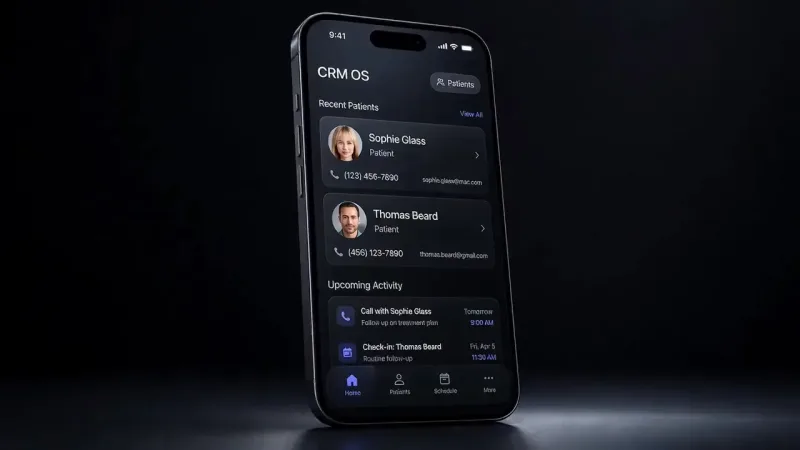
A smartphone standing on a dark surface showing a dark app screen headed "CRM OS" with a "Recent Patients" list of two contact cards and an "Upcoming Activity" section below.

AI Product · Dec 2025 · 7 min read

How CRM OS Reimagined Eight Industries

Blog

  • Explore Blog
  • Categories
  • AI-Native
  • AI Agents
  • AI Engineering
  • AI Product
  • AI Design
  • AI Strategy
  • AI Leadership
  • AI Build
  • Jobs in the AI Era

Get started

  • Sign Up
  • Sign In

More from Orbyt

  • Orbyt Jobs
  • Orbyt Intelligence
  • Orbyt One

Product

  • Orbyt Jobs
  • Orbyt Intelligence
  • Orbyt One

Research

  • Orbyt Collective
  • Orbyt Skunkworks

Developers

  • Orbyt API & MCP
  • Intelligence API & MCP
  • Claude Desktop
  • ChatGPT
  • Zapier

Resources

  • Salary Data
  • AI Salary Hubs
  • Job Search
  • Career Guides
  • Reference
  • Compare

Free Tools

  • Resume Score
  • Cover Letter Generator
  • Interview Prep
  • Unemployment Calculator
  • AI Skills Assessment
  • Compare Offers
  • Arcade Games

Company

  • About
  • Leadership
  • Values
  • Creed
  • Blog
  • Books
  • Support
Product
  • Orbyt Jobs
  • Orbyt Intelligence
  • Orbyt One
Research
  • Orbyt Collective
  • Orbyt Skunkworks
Developers
  • Orbyt API & MCP
  • Intelligence API & MCP
  • Claude Desktop
  • ChatGPT
  • Zapier
  • All developer docs →
Resources
  • Salary Data
  • AI Salary Hubs
  • Job Search
  • Career Guides
  • Reference
  • Compare
Free Tools
  • Resume Score
  • Cover Letter Generator
  • Interview Prep
  • Unemployment Calculator
  • AI Skills Assessment
  • Compare Offers
  • Arcade Games
  • All free tools →
Company
  • About
  • Leadership
  • Values
  • Creed
  • Blog
  • Books
  • Support
Orbyt Labs™

© 2026 Purecraft LLC  All rights reserved.

Privacy·Terms·Security·Trademark·Accessibility·DPA·Refund·Status·Sitemap

Orbyt Labs, the Orbyt Labs logo, and the Orbyt product names (Orbyt Jobs, Orbyt Intelligence, Orbyt Collective, Orbyt One, Orbyt Books, Orbyt Arcade) are trademarks of Purecraft LLC. Product names, logos, and brands of others are the property of their respective owners. Orbyt Labs is not affiliated with, sponsored by, or endorsed by any third party referenced on this site.