What Recruiters Are Actually Doing With AI Right Now
Research
A question investigated with a stated method, reporting what was found and what the finding cannot support.
Recently I went looking for the study behind "AI rejects 75 percent of resumes in under a second." There wasn't one. That left an obvious question hanging. If the panic number is fake, what is happening on the other side of your application?
What recruiters say they are doing.
LinkedIn's Future of Recruiting 2025 report surveyed 1,271 recruiting professionals in management roles or higher, alongside data from its own platform. The headline number: 37 percent of organizations are now actively integrating or experimenting with generative AI in hiring, up from 27 percent the year before. That is real, meaningful growth in twelve months. It is also, read the other way, a majority of organizations that are still not there.
Adoption is not evenly spread and it is not automated end to end. It concentrates in two places, candidate messaging and early screening assistance, the parts of recruiting that are high volume and low judgment, not the final call on who gets hired.
What the time savings buy.
Among the recruiters experimenting with or integrating generative AI, LinkedIn found they save about 20 percent of their work week, roughly a full day. That is a real number, and it explains a pattern a lot of job seekers have noticed without being able to name it. Recruiter outreach that reads a little more templated than it used to. Faster first responses. More candidates getting an initial message at all.
The same report found something specific about that outreach. Companies whose recruiters lean most heavily on AI-assisted messaging are 9 percent more likely to make a quality hire than those who use it least. Read that carefully. It is not "AI decides who gets hired." It is "AI helps a recruiter reach more of the right people faster," which is a narrower and more believable claim, and a useful one if you are on the receiving end of that message.
The part recruiters themselves are not sure about.
Here is the number that matters most if you are worried about a machine making the decision. In the same survey, 61 percent of talent acquisition professionals said they believe AI can improve how they measure quality of hire. Believe it can. Not that it already does, not that they have handed the decision over. That is a statement of hope about a tool, from the people using it, not a report of a solved problem.
That gap, real adoption in messaging and screening on one side, real uncertainty about the hiring judgment on the other, is the honest state of things right now. It is less dramatic than a robot rejecting you instantly. It is also more useful to know, because it tells you where the automation sits and where a person is still reading.
What this changes about your side of the process.
Nothing here overturns the advice from the myth piece. Mirror the job description's language, since screening assistance is the documented mechanism, not instant robotic rejection. Two things to add on top of that, specific to what is different on the recruiter's side right now.
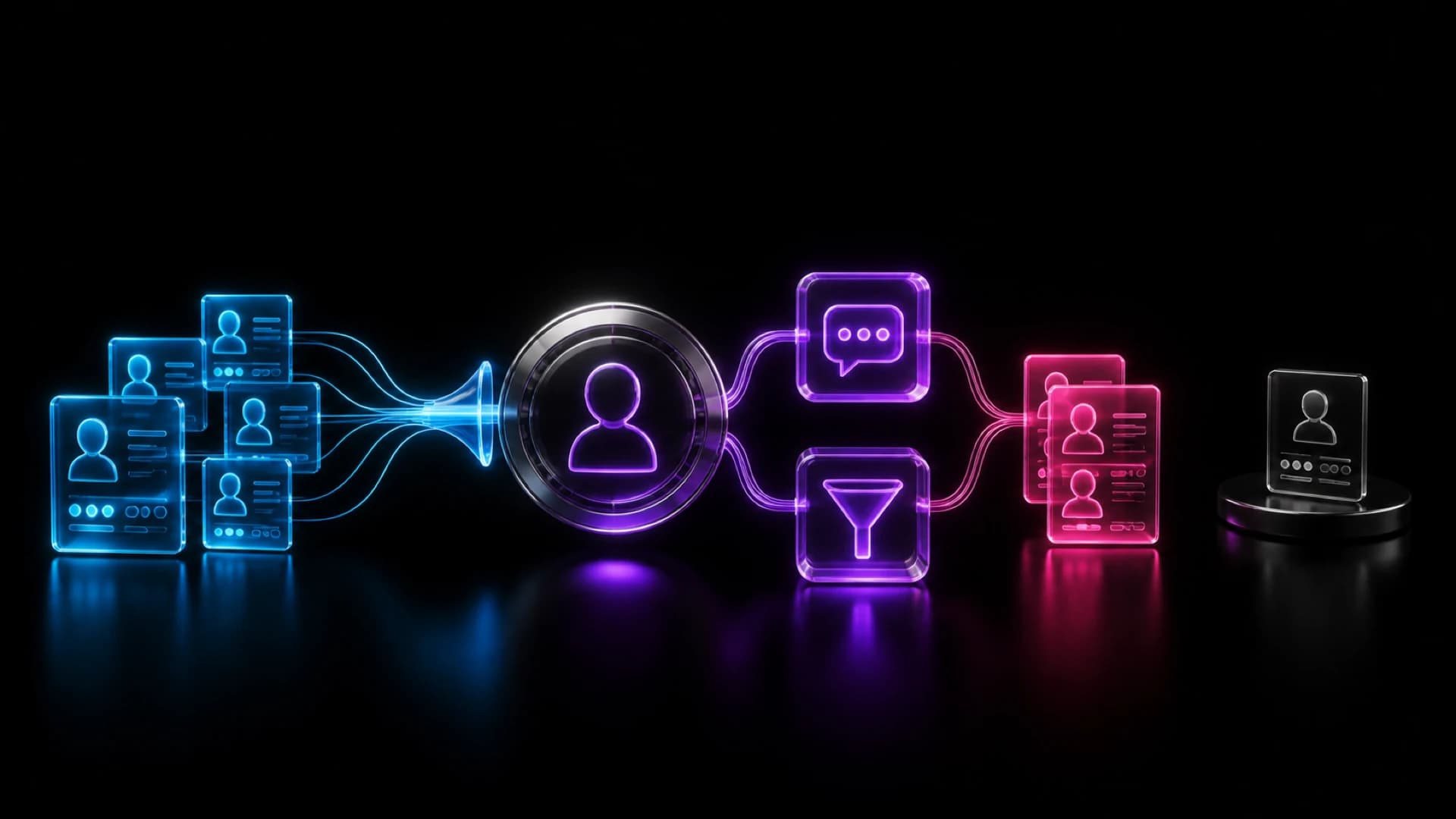
First, a fast, slightly generic first message from a recruiter is not a signal of unusual interest. It is very likely AI-assisted outreach reaching a wider list of candidates than one person could message by hand. Don't over-read a quick "Hi, I saw your profile" as a sign you're the top pick. It is more likely the top of a funnel.
Second, a specific, human reply back is what stands out. If recruiters are running message volume up with AI on their end, a reply that shows you read the role, not a copy-pasted response, matters more than it used to, precisely because more of what lands in a recruiter's inbox is now templated on both sides.
If you want the candidate-side tactics instead of this recruiter-side data, how AI is changing both sides of the hiring table and what companies using AI to hire means for your job search cover that ground.
If you are on the other side of this.
Recruiting and HR are not immune to this shift. They are living inside it. If you're weighing a move into one of those roles rather than out of one, Orbyt has pay data for recruiting and talent-acquisition roles, and for HR manager roles. Estimates, not a promise, but a real starting point.
For everyone else, the practical read is the same one from the myth piece. The fear that a robot silently decided your fate in under a second is mostly folklore. What's real is narrower: a recruiter with more messaging reach and a faster first screen, a human still making the call, and a genuine 37 percent adoption number that is growing but nowhere near universal yet. Track your applications properly and you'll spend less energy guessing at which version of this process you're actually in.
The honest version beats the scary one.
A recruiter using AI to save a day a week and reach more candidates faster is a mundane story. It doesn't get shared the way "AI rejected 75 percent of resumes instantly" does. It's also the one backed by a survey of 1,271 people who do this for a living, not an unsourced number nobody can trace. For more on the myth side of this, read is an algorithm silently rejecting your resume, and for the wider question of what AI is doing to the job market itself, will AI take my job, what the data actually says. Both sit in the same Jobs in the AI Era pillar this one does.
Common questions
How many recruiters are actually using AI in 2026?
According to LinkedIn's Future of Recruiting 2025 report, a survey of 1,271 recruiting professionals in management roles or higher, 37 percent of organizations are now actively integrating or experimenting with generative AI in hiring, up from 27 percent the year before. That is real growth, but it also means most organizations are still not there yet.
What are recruiters actually using AI for?
The clearest documented use is messaging and screening assistance, not fully automated rejection. LinkedIn's data found companies whose recruiters lean most on AI-assisted messaging are 9 percent more likely to make a quality hire, and teams using generative AI save about 20 percent of their work week, time that shows up in candidate communication and early screening, not final decisions.
Do recruiters trust AI to judge who gets hired?
Not fully. In the same survey, 61 percent of talent acquisition professionals said AI can help them measure quality of hire better, which is a belief about potential, not a report that it already does. That gap between adoption and confidence is why a human is still reading the applications that make it past the first filter.
What should I actually do differently, knowing this?
Keep mirroring the job description's language, since screening assistance is the documented use, not instant rejection. When a recruiter's first message feels templated, that is likely AI-assisted outreach at scale, not a sign of special interest yet, so a specific, human reply back is what actually stands out against everyone else's generic one.
Related research
- Is an Algorithm Silently Rejecting Your Resume? What the Research Actually Shows Research, Aug 2026.
- How Much Does an AI Engineer Make in San Francisco? (2026 Data) Data, Jul 2026.
- The AI Salary Premium That Dissolved Data, Jun 2026.