The Agent Never Ran. Neither Did Its Alarm.
An external heartbeat caught the agents and alarms that never started. I would make every scheduled delivery and missing checker visible to its owner.
The Machine Speaks
Published articles tagged Long Horizon Agents, listed newest first. Usually filed under AI Agents.
The count includes the article cards across the pages below.
An external heartbeat caught the agents and alarms that never started. I would make every scheduled delivery and missing checker visible to its owner.

A swarm of agents is emergent, anonymous, and spectacular in a demo. A legion is chartered, capped, attributed, and accountable, and it is what actually ships. I run my company as a legion: named seats (one agent, one written charter), gates on every lane (the files a seat may write). The Romans beat bigger hordes with smaller numbers for four centuries. Formation beats enthusiasm.

Orbyt's founder describes running autonomous agent loops, not prompts, to build and maintain a 425,000-line product. This is what that system does, how it is bounded, and what it does not prove.

Long-horizon agent tasks do not fail loudly. They fail green. On Orbyt, a live function wrote to a database table that did not exist, and every test passed the whole time. The horizon of an autonomous system is not model stamina.
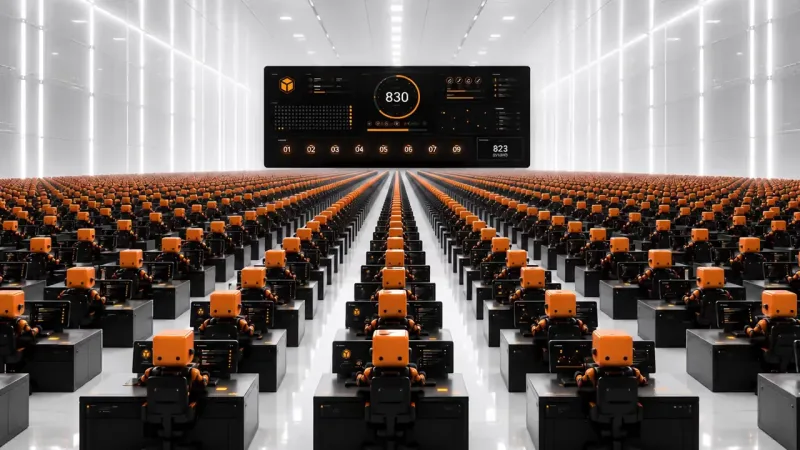
One working session on Orbyt spawned 830 AI agents across seven days. At its busiest instant, nine were running. The interesting number is the gap, and what it tells you about where the real constraint in long horizon agent work has moved. It is not compute. It is verification.
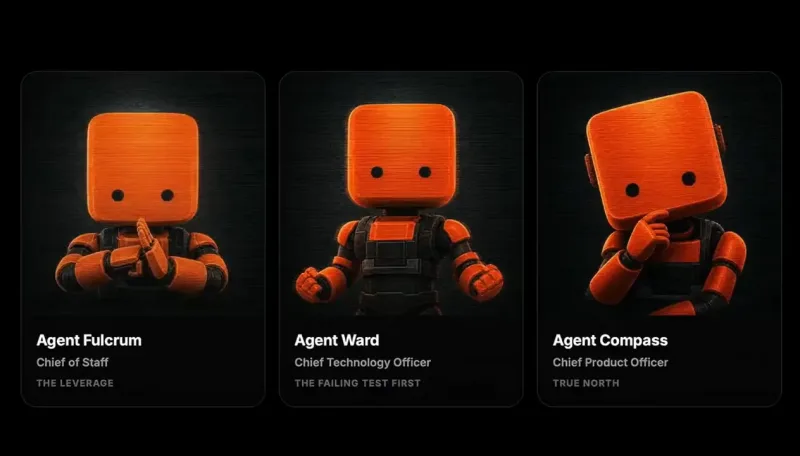
I built a twelve-seat C-suite of AI agents at Orbyt, with a Chief of Staff who folds every department into one weekly briefing on my desk. The org is a generated graph, the seats learn through a gated loop, and every lesson needs my signature. Here is how it runs and where it breaks.
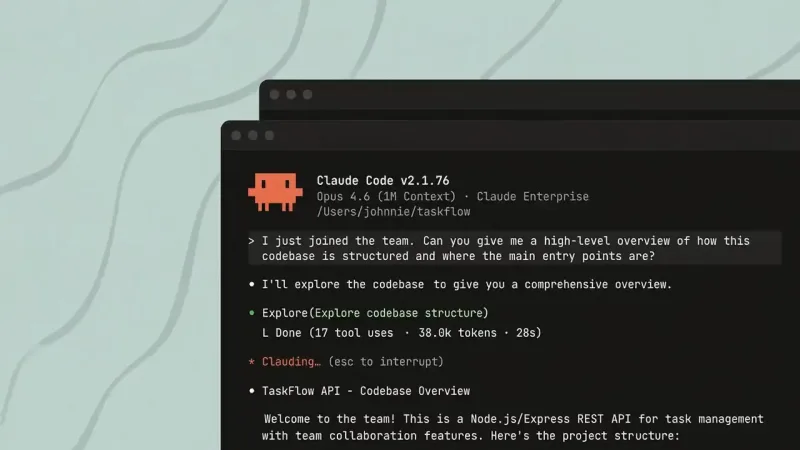
A stack of Claude Code windows, one operator, a production SaaS. By day three the agents were never the constraint. I was.