
I Wrote a Loop That Could Run Forever.
A build loop with a 9 out of 10 quality gate and a backlog that never shrinks has no fixed point. How Offer City got built, and what bounded it.
The Machine Speaks
Published articles tagged Loop Engineering, listed newest first. Usually filed under AI Engineering.
The count includes the article cards across the pages below.
A build loop with a 9 out of 10 quality gate and a backlog that never shrinks has no fixed point. How Offer City got built, and what bounded it.

Self-healing sounds like the system got smart. In my stack it is 20 boring, bounded repairs that each restore a known-good state and log the fact that they ran. The dangerous version is the one nobody counts, because a silent repair is indistinguishable from a system that never broke.

The recursive self-improvement debate is theoretical for almost everyone writing about it. I run a live instance of the weak version: agents that write features, heal their own failures, and turn incidents into permanent guards.

Orbyt's founder describes running autonomous agent loops, not prompts, to build and maintain a 425,000-line product. This is what that system does, how it is bounded, and what it does not prove.

Long-horizon agent tasks do not fail loudly. They fail green. On Orbyt, a live function wrote to a database table that did not exist, and every test passed the whole time. The horizon of an autonomous system is not model stamina.
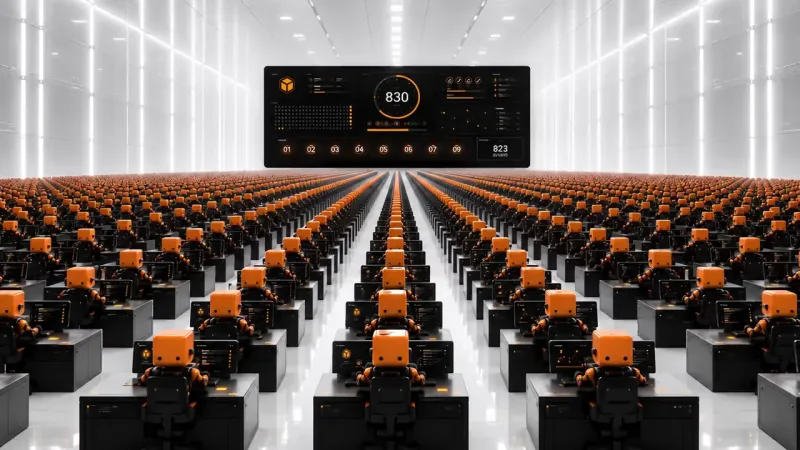
One working session on Orbyt spawned 830 AI agents across seven days. At its busiest instant, nine were running. The interesting number is the gap, and what it tells you about where the real constraint in long horizon agent work has moved. It is not compute. It is verification.
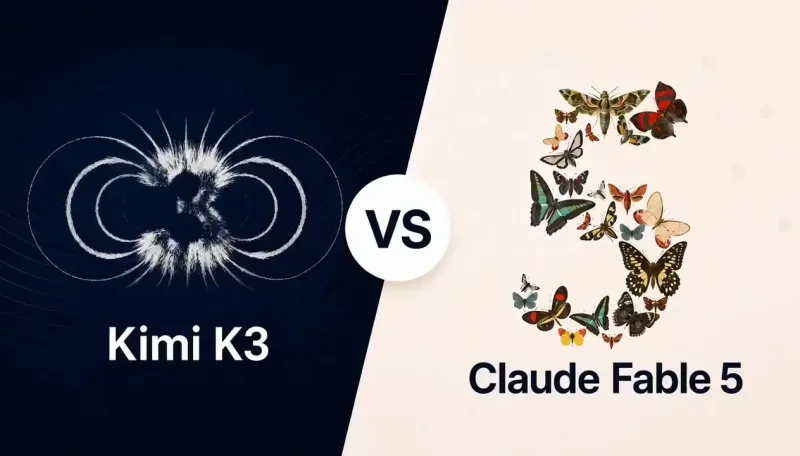
Kimi K3 landed July 16: a 2.8 trillion parameter open-weight model at frontier level for 70% less than Fable 5. It does not beat Fable overall. It changes the market anyway, because an open frontier cannot be export-controlled away. I watched Fable vanish for 19 days.

Prompt engineering optimized one answer from one model call. That era is over. The unit of AI work is now the loop: spec, context, action, feedback, verification, repeated until the gate is green. The prompt became one turn inside a machine.
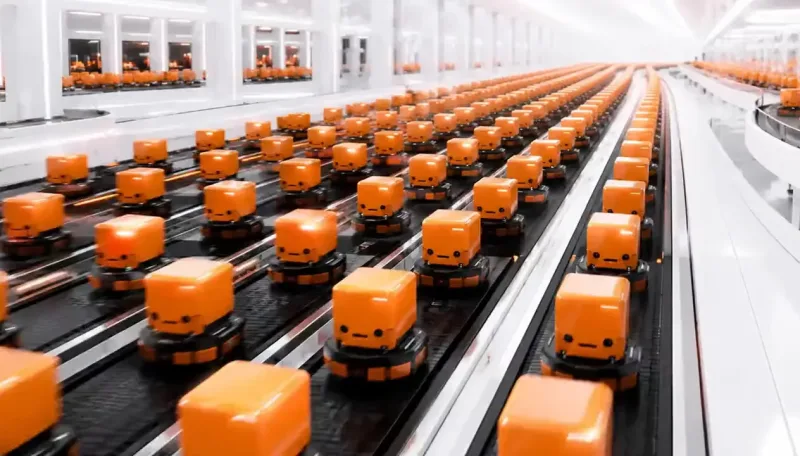
When the cost of building collapses, velocity stops being a nice-to-have and becomes a structural moat. Speed compounds. Faster shipping means faster learning loops, and learning loops widen the lead like interest. Orbyt shipped 243,000 lines in 32 days and never slowed down.
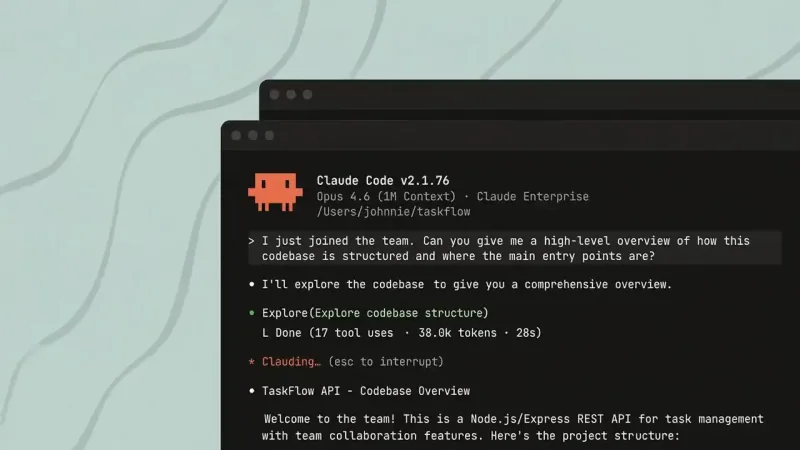
A stack of Claude Code windows, one operator, a production SaaS. By day three the agents were never the constraint. I was.
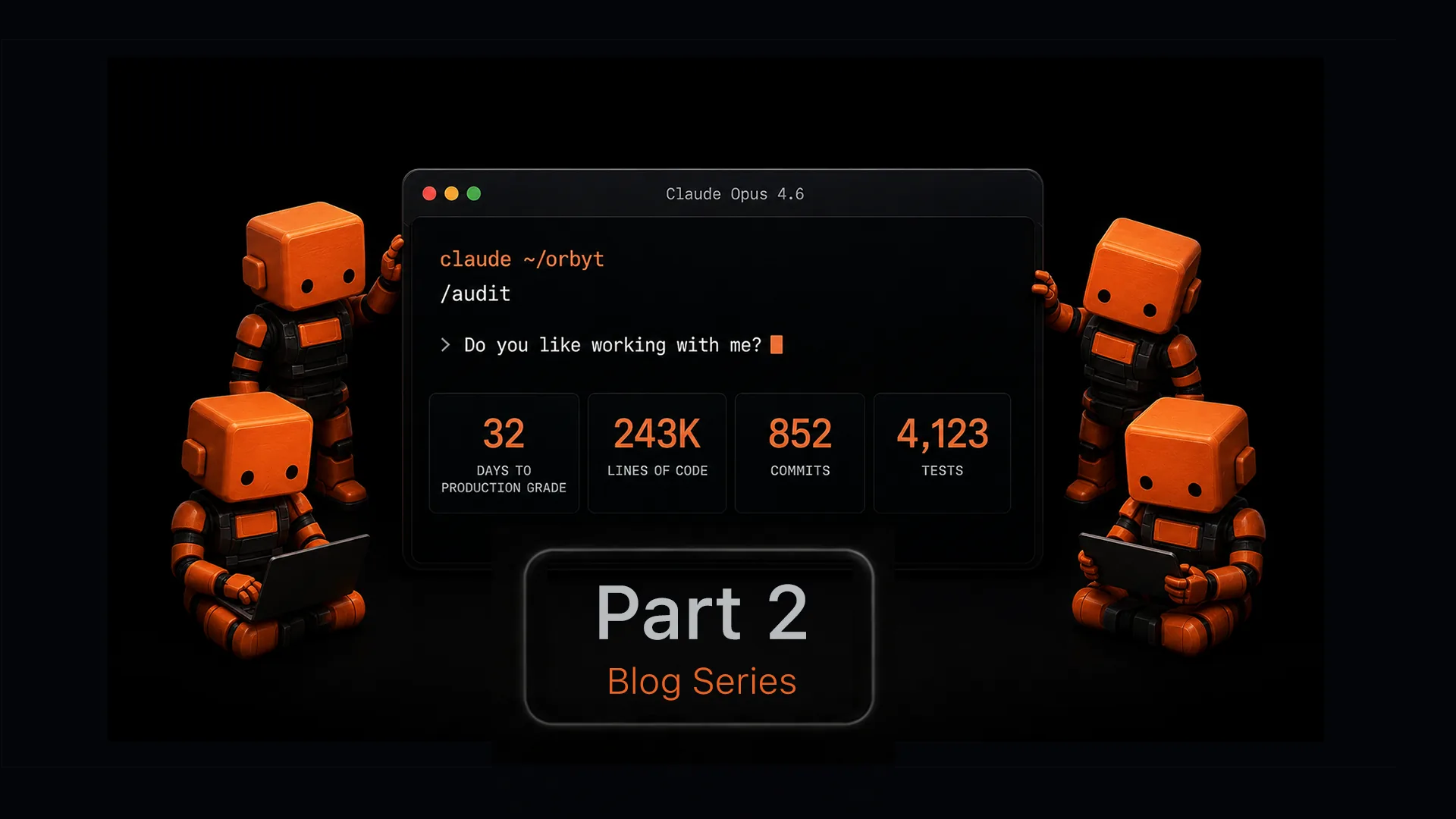
Inside the daily workflow of AI-native development. CLAUDE.md as institutional memory, the review loop, the tools, and the session patterns that made 32 days of solo building possible.